
By Noelle Dodge | October 31, 2026 | A World of Wonder Press
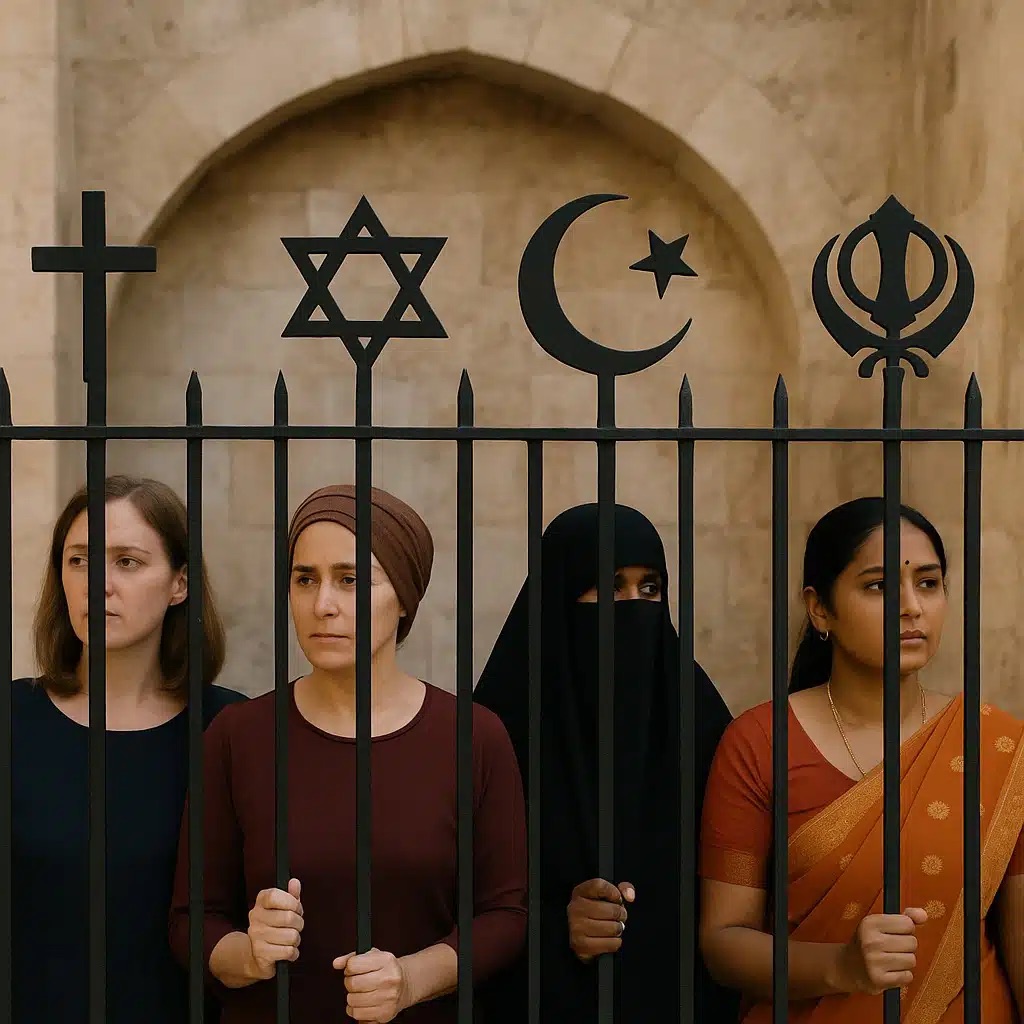
Structural Exclusion from Leadership: The Sticky Floor
When sociologists track women leaving organized religion, they find that they rarely substitute one rigid institutional label for another. Instead, they become “Spiritual but Not Religious”, creating a customized, “cafeteria-style” approach to their personal beliefs.
The transition for most women looks like a blend of psychology, wellness, and decentralized spirituality. Well recognized as “Mind, Body, Spirit Healing”.
To understand why women left organized religion in massive waves, look at the structural, theological, and psychological barriers they faced and need to heal from.
While experiences varied across different denominations and historical-sociological landscapes, research exposes a single, systemic core issue: the institutional denial of women’s autonomy, agency, and spiritual equality.
Within traditional patriarchal structures, a woman’s worth was almost entirely conditional upon her submission to male authority.
This oppression manifested in several deeply interconnected ways: For centuries, the most direct form of oppression was the institutional ban on female leadership.
Traditionalist theologians have historically relied on a few specific passages often called the “restriction verses” or “silencing passages” of gender roles to justify barring women from spiritual authority.
The psychological effect of some traditions that honor and respect women while at the same time treating them “less–than”, turned many women away from religion altogether. It was the glass ceiling made by men with the sticky floor under women’s feet that pushed them out the doors; not their faith and not God.
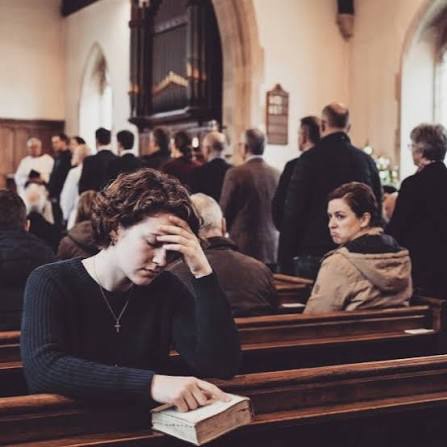
Church Hurt: Female Oppression Disguised as Submission
Women were barred from ordination, preaching, teaching men, or holding governance positions. Theology was actively weaponized to enforce a strict hierarchy in private life. Many traditions preached that men and women were “equal in worth but distinct in role.” In practice, this meant men were divinely designated to lead, and women were commanded to submit. Decisions regarding church doctrine, finances, community rules, and moral codes were made exclusively by men. Women provided the majority of the volunteer labor (teaching children, cooking, hospitality), but had zero institutional power.
The complete erasure of female spiritual archetypes leaves women without a divine reflection of themselves, teaching them that their spiritual path could only ever be mediated through a father, a husband, or a male priest.
Because marriage was viewed as an unbreakable covenant and male headship was divine law, women facing domestic abuse or infidelity were routinely counseled by male clergy to pray harder, submit more, and return to dangerous households to maintain the family structure. What they were seeking was support from their church leaders to counsel their husbands and intervene with family rehabilitation through a Christian perspective.
Which is the very foundation of Awakenings Family Resort & Spa; to provide support to the family while educating and healing the person in the household that is creating the dysfunction.
This rehabilitation cannot take place without having the entire family educated because the abuser is often feeding off the enabling behaviors and dysfunction of the other household members. Praying harder, would consist of the family praying together and seeing the marriage as a partnership with God at the center of it.

Theological Blame and the “Eve” Archetype
Jesus valued women; religion and man twisted the word of God like a serpent and threatened women with accusations of witchcraft and labels such as Jezebel if they dare challenged men’s control, authority or speak out against oppression.
Mainstream Judeo-Christian theology historically framed women as spiritually weak, easily deceived, and inherently dangerous. Beginning with the Source of Sin: The biblical story of the Fall was frequently used to justify the subjugation of women, painting Eve as the original temptress who brought sin into the world.
Women were taught to distrust their own intuition, desires, and minds, viewing their natural instincts as inherently corrupt or prone to temptation.
Following the source of sin, purity culture and bodily autonomy. Organized religion heavily policed women’s bodies, sexuality, and reproductive choices. The responsibility for male sexual purity was displaced onto women. Women should dress modestly and only wear dresses to mass. Girls were taught that their clothing and behavior dictates a man’s thoughts, leading to intense bodily shame and hyper-surveillance.
Although women were powerless in the church, they seem to be incredibly powerful over men’s thoughts. The ones making all the decisions and the only ones with authority are not responsible for their impure thoughts. Pretty contradictory and convenient in shifting the blame.
It’s no coincidence that men insist on women wearing dresses. Regardless of how modest, the access to assault a woman sexually is much easier in any dress than a woman wearing pants with a belt. If a man is going to have an impure thought, a church full of women in dresses isn’t going erase that. It’s just an excuse to control what they wear.
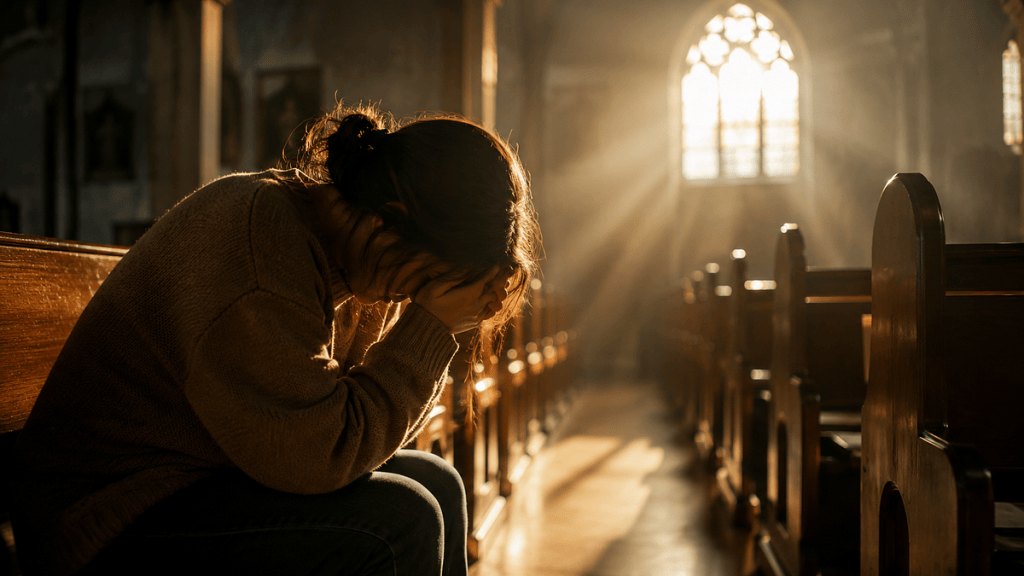
The Cognitive & Spiritual Dissonance
Several distinct societal, economic, and spiritual catalysts came together in the 1970s to create this historic pivot: The Clash Between “Consciousness-Raising” and Church Hierarchy.
The 1970s marked the peak of second-wave feminist “consciousness-raising groups”. In these groups, women gathered to discuss systemic oppression, marital dynamics, and personal freedom. When women took these new egalitarian ideals back to their local churches, they hit a brick wall. Women were learning about their empowerment and rights on a Tuesday and told by a priest or pastor to submit to a man who is not submitting to God on Sunday.
As the laws changed, this gave women freedom to leave their husbands and that often included leaving their churches, with their children in tow. The church was no longer a safe haven when it protects the abuser while shaming and burdening the victims.
During this era, mainline and evangelical churches were overwhelmingly male-dominated, barred women from ordination, and preached male headship. Realizing that traditional religious structures viewed the emancipation of women as a threat rather than a triumph, many women concluded that to free themselves socially, they had to leave patriarchal theology behind.
In Catholic liturgy, things that are incredibly sacred are always veiled; the tabernacle containing the Eucharist, the chalice, and the altar are all veiled. A woman’s head is traditionally recognized as inherent sacredness due to her unique power to bring human life into the world. For many women, this form of respect creates a cognitive and spiritual dissonance and is viewed as a backhanded form of oppression. She’s considered sacred, but if that sacred vessel is abused by her husband, she is advised to pray harder, be quiet and make babies.
The Birth Control Pill
Approved in the 1960s but widely utilized by young women in the 1970s, the pill allowed women to reliably control their reproductive timelines.
During this decade, women did not leave the church out of a loss of faith. They actively walked out because the traditional church structurally resisted women’s liberation, while the emerging New Age movement offered women something they had never been granted in mainstream Judeo-Christianity: divine authority, bodily autonomy, and institutional power.
Men in the church and society want reproductive control over women without taking any of the responsibility or accountability. Severe restrictions and bans on birth control, abortion, and divorce stripped women of control over their own biological, economic, and marital destinies. Even pro-life men and women can’t deny that it is the man who controls getting the woman pregnant. Yet, no birth control pills are manufactured that interrupt their hormones and their refusal to wear condoms is not a public issue or debate. Men are free from the shame, mental, and physical effects of a woman’s choice to abort or to be an unwed mother on public display. This is not to say it doesn’t impact him at all, but let’s be honest his hormones and body doesn’t physically respond and prepare for anything. The public doesn’t take one look at him and make a judgement. He isn’t turned away at job interviews because he’s having a child.
He is the one who implanted her with his failure to control his bodily fluids, yet she takes the blame, shame, and responsibility. We are seeing the original blame-shift play out all over again from Adam and Eve. They both enjoy the moment, he blames her.

The Untwisted Word
When read holistically, the Bible routinely highlights women operating with supreme political, spiritual, and theological authority.
Esther – The Queen
Scripture: The Book of Esther
Initially a hesitant leader, Esther eventually embraced the royal platform God gave her, choosing to step into her destiny to deliver and save her people from total destruction. The leadership lesson that God is teaching the church through Esther from the Old Testament, is that the plans of God are not dependent on you, but you are invited to be a part of his amazing wonders of your own free will. Imagine, a woman saying yes to God, and you are the man blocking God’s plans as a leader of a church. Matthew 7:23
Deborah (Judges 4–5): Deborah served as the Supreme Judge of Israel, holding the nation’s highest political, judicial, and military office. The primary leadership lesson that God is teaching the church through Deborah from the Old Testament, is that true leadership is defined by collaboration, empowerment, and strategic obedience rather than potential authority or personal glory. Nowhere in the Bible, does God or Jesus tell us to focus on the preacher or the theatrics of rituals. Matthew 7:23
Mary Magdalene (Luke 24): By appearing first to Mary Magdalene and commissioning her to share the news with the other disciples, Jesus established a framework that directly challenged the gender hierarchies of his time. Known as the apostle to the apostles, Mary was the first evangelist and witness of the resurrection, subverting a patriarchal culture where a woman’s legal testimony was worthless. It is blasphemy to contradict the word of God. Yet, male leadership in several Christian denominations continue to contradict the very values Jesus demonstrated in his relationship with Mary Magdalene, risking the words no leader wants to hear. “Depart from me I never knew you.” Matthew 7:23
Phoebe (Romans 16:1–2): Appointed as a deacon and entrusted by Paul to deliver his letter to the Romans. Phoebe was responsible for reading it aloud and explaining its theology. The primary leadership lesson God is teaching the church through Phoebe found in the book of Romans introduced by Paul the “Apostle of Gentiles” is that spiritual authority, leadership, and institutional trust are rooted in service not their gender. That lesson is ignored by the Catholic Church and other denomination in the year 2026 as we see the signs of end times. Matthew 7:23
Junia (Romans 16:7): Praised by Paul as “outstanding among the apostles.” For centuries, her identity was obscured when patriarchal translators changed her name to the masculine “Junias.” The primary leadership lesson God is teaching the church through Junia found in the book of Romans introduced by Paul is that peer-level leadership, apostolic authority, and spiritual influence are determined by a person’s calling, character, and willingness to sacrifice – not their gender. Another woman recognized by the apostle of Gentiles and ignored. Matthew 7:23
Miriam – The Sister (Exodus 2:1-10, 15:19-21)
Miriam was the first woman explicitly called a “prophetess” in the Bible and served as a crucial co-deliverer of Israel alongside her brothers, Moses and Aaron. Her story spans from the banks of the Nile to wandering in the wilderness with the Hebrew people. She led people in worship, and remained by Moses’ side throughout Exodus. She balanced exceptional courage with a sobering lesson in the dangers of leadership envy. Like most men that God used, she was far from perfect. She was tempted with envy in her brother’s position, in leadership by not recognizing how God was using her. God quickly corrected her. This is a lesson from God to our churches in the Old Testament. Her role was different but God was still using her. Yet, these lessons go ignored. Men like David and Moses who had committed murder are elevated in today’s churches but women are still excluded from leadership for lesser reasons. Matthew 7:23
Priscilla (Acts 18)
A prominent church planter who is explicitly recorded teaching, correcting, and instructing the theology of the male preacher Apollos. The primary leadership lesson God is teaching the church through Priscilla, found in the New Testament is that the collaborative, partnership-based leadership creates a far more resilient and institutionally competent organization than a top-down, single leader model. Priscilla is mentioned six times in the New Testament alongside her husband, Aquila. Notably, four of the six instances, her name is listed first. In an ancient patriarchal world, listing a wife’s name before her husband‘s was highly unusual and strongly indicates that Priscilla was the theological communicator and the strategic leader of the two. She was not subservient to her husband in that role.
Matthew 7:23
And lastly but most importantly,
Mary Mother of Jesus: Luke 1-2
Mary was young when God chose her to carry the baby that would save the world. She risked judgment and speculation to do so. She was approached by angel Gabriel, wise men came to recognize his divine and royal significance and it was her responsibility to teach, support and guide the savior of the world. Not a man, not a church leader; a woman. She had to witness her son being crucified for sins he did not commit. Her faith sustained her through these times, and she handled both the miraculous and the traumatic experiences with a heart that trusted in God and that God trusted.
God didn’t see these women as unequal to men or confining women strictly to domestic duties. Jesus welcomed women as students and disciples. Luke recorded this in chapter 10 verses 38 through 42. I certainly wouldn’t want to be a man reducing the son of God‘s mother to a sacred vessel used for hospitality and baby making.
A few passages that fit the narrative for male leaders to oppress the importance of women in the church has greatly damaged society as they buried the truth about these remarkable women who have been oppressed along with the women in the congregation.
The mass exodus of Catholic sisters and nuns began abruptly in the late 1960s, following the conclusion of the second Vatican Council in 1965. In the United States alone the number of religious sisters collapsed from a peak of nearly 180,000 in 1965 to roughly 36,000.
Some progressive sisters left because the hierarchical, male-led Vatican structure was blocking their attempts at meaningful, deeper reform. Many progressive sisters felt deeply drawn to Frontline, social justice, movements, including civil rights, anti-war protest, and direct poverty relief. When church superiors attempted to restrict their political activism or monitor their reading, thousands of sisters chose to exit their formal canonical vows entirely. Such as the famous case over 300 sisters of the immaculate heart of Mary in Los Angeles in 1970 broke away to form independent, non-canonical lay communities so they could pursue social justice free from Rome’s control.
Historically, becoming a religious sister, was one of the few avenues through which an ambitious, intelligent woman could secure higher education, hold executive power, and run major institutions like hospitals, colleges, and schools. With the arrival of the women’s liberation movement in the late 1960s, secular fields rapidly opened up to women. Women could now pursue medicine, law, education, and social work on their own terms without having to take corporate vows of absolute obedience, poverty, and celibacy to do so.
By the men oppressing women in the church and in the services of the church, women have had to fight for it on their own terms. Doing so with church hurt removed God from society. Losing nuns and the foundation of God in public roles such as teachers, nurses, and social workers has damaged society. Roles that wouldn’t have been abandoned if the hierarchical male-led Vatican collaborated like our female biblical leaders.
It is the spirits of Pharisees, Jezebel, and Leviathan that often bring division in the church through the men; in the form of porn addiction, adultery, violence, substance abuse and oppression.
Matthew 23:27 “Woe to you, teachers of the law Pharisees, you hypocrites! You are like whitewashed tombs, which look beautiful on the outside but on the inside are full of bones of the dead and everything unclean.”
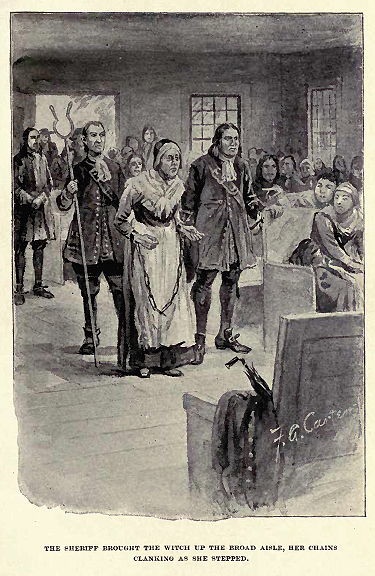
Salem Witch Trials
In colonial Massachusetts between February 1692 and May 1693 a series of hearings and prosecutions were held accusing women of witchcraft. These were called the “Salem Witch Trials”. During the Salem Witch trials, 14 innocent women and 5 men were executed by hanging, while others died in prison under bleak conditions, waiting for trial. The legal system failed them completely by weaponizing hearsay, local grudges, and supernatural visions against their pristine reputations.
Driven by religious extremism, local factional politics, personal grudges, and mass hysteria, more than 200 people were formally accused of practicing the “devil’s magic.” The panic resulted in 30 convictions.
The early phase of the 1692 panic deliberately preyed upon women who fell outside traditional Puritan social norms. Being poor, relying on door-to-door handouts, or failing to attend church due to chronic illnesses left these vulnerable women with virtually no political protection. Women who asserted control over their own lives, managed property independently, or refused to remain passive in front of authority figures easily sparked localized paranoia. Local grudges and professional envy, particularly surrounding independent midwives or landowners, frequently translated into fatal courtroom accusations.
Bridget Bishop was a tavern keeper and the first person executed for witchcraft during the Salem witch trials in early 1692.
The young daughter of Reverend Samuel Parris, Elizabeth “Betty” Parris (age 9) and Abigail Williams (age 11) his niece, both lived in his household. When the strange fits, screaming, and physical contortions began in January of 1692, local physician William Griggs could find no medical explanation, he declared the girls were under the influence of an “Evil Hand” (witchcraft). Prompted by adults to name who was torturing them, Abigail transformed from a victim into a primary driver of the trials. She went on to file 41 formal legal complaints and accuse roughly 57 people of witchcraft, leading directly to numerous imprisonments and executions including Giles Corey who was a man pressed to death.
Altogether, about 200 people were tried. Sarah Osborne was a colonist in the Massachusetts Bay Colony and one of the first women to be accused of witchcraft in the Salem witch trials. Under pressure, the girls blamed an enslaved Caribbean woman named Tituba, alongside two marginalized local white women, Sarah Good and Sarah Osborne. Sarah Osborne was suggested to be a witch by Sarah Good. Sarah Good said she had been tormenting the girls.
Established specifically to process the backlog of cases, this court notoriously accepted “spectral evidence”—testimony where accusers claimed to see the invisible shape or spirit of the witch tormenting them.
Turning Point and Aftermath
By autumn of 1692, the hysteria began to cool as accusations targeted highly respected members of the community, including the wife of Governor William Phips. Governor Phips subsequently dissolved the special court and barred spectral evidence, leading to the rapid collapse of the trials and the release of the remaining prisoners by May 1693. In the centuries since, Salem has become a universal cautionary tale about the dangers of isolationism, religious extremism, rush to judgment, and mass hysteria. Another side of the same coin to what we read regarding MLK and Manson.
The Roots of New Age (1970s –1980s)
The organized New Age movement coalesced during this era, drawing heavily disillusioned women out of mainline and conservative churches. Women sought out holistic health, mysticism, astrology, and personal empowerment philosophies that rejected male-dominated clerical hierarchies. The cultural shift of the 1970s was a perfect storm where second-wave feminism collided with the explosion of the New Age counterculture.

Where They Landed
Today, the largest group of women leaving the church fell into a demographic category, sociologists call the “Nones”. These are people who claim no specific religious affiliation. They are typically agnostic, mildly deistic, or entirely indifferent to organized spiritual systems. Their primary goal is freedom from religious control, not joining a new spiritual subculture. They have an individual spiritual belief system and generally not Bible based.

The Modern Witch – A “Pick-and-Choose” Consumer Spirituality
For women who do engage with witchcraft imagery on social media (like #WitchTok), for some it is a serious practice of the occult while for many, the attraction is usually metaphorical and political rather than literal. Many children’s TV shows, especially Disney, entertainers, celebrities, adult television shows and movies, glorify, witchcraft and magic. They view the “witch” as a historical symbol of an independent, powerful woman who lived outside the bounds of patriarchal control. Engaging with tarot cards or moon cycles is often treated as a poetic, therapeutic way to connect with nature and their own intuition, rather than a belief in supernatural sorcery. The Secularization of The Occult in the modern marketplace, has stripped much of the “religion” out of New Age practices and relabeled it as “healing arts”.
Instead of practicing literal witchcraft (which involves structured rituals, spellwork, or joining a coven), most women adopt isolated New Age or esoteric elements purely for stress relief, self-reflection, and mental wellness. Astrology: They check their birth charts or horoscopes for psychological insights, much like a personality test. Manifestation & Mindfulness: They practice yoga, meditation, or positive affirmations (like the Law of Attraction) to manage anxiety and career goals. Crystals: They buy crystals or essential oils as home decor or holistic aesthetic pieces, rather than viewing them as literal magic tools.
Major corporations sell tarot cards and crystal sets as lifestyle accessories. For the average young woman, buying a sage stick or a crystal is no more a religious conversion to witchcraft than doing a downward-dog pose is a religious conversion to Hinduism. And that is exactly what evil relies on, ignorance. Downward dog is harmless. It’s just a stretch. Tarot cards are harmless, they’re therapeutic and provide guidance. Tarot cards with biblical scripture on them, remove the guilt of entertaining divination. The serpent slides in a little bit of truth to get you to agree. Until life begins to fall apart so uncontrollably that they either fall beyond rock bottom in their self-destruction or turn to God. It works until it doesn’t.
This is the danger of not allowing women to utilize their Divine gifts in the church. They seek fruit from forbidden trees where they are welcomed to utilize them. Wouldn’t it be wise of men to be the ones to provide that space and teach, guide and support them rather than exclude and oppress them? If Adam had obeyed God and taught Eve everything he knew, she would not have been tricked into seeking out information from the forbidden tree by her ignorance. She would not have been naïve enough to fall for it. But then she would’ve reminded him, it was easy for him to indulge in the fruit after she had it first. He didn’t say no. He let her and he indulged too. But the men in church never talk about that. After blaming her, he blamed God for sending her to him! The men and churches rarely talk about that either. They only want to talk about women’s judgment, how they are naïve, and easily deceived. Since the beginning, the hierarchy of men has always been the downfall of man. It’s always been the crack that allows the serpent to deceive both men and women to ultimately destroy the children.
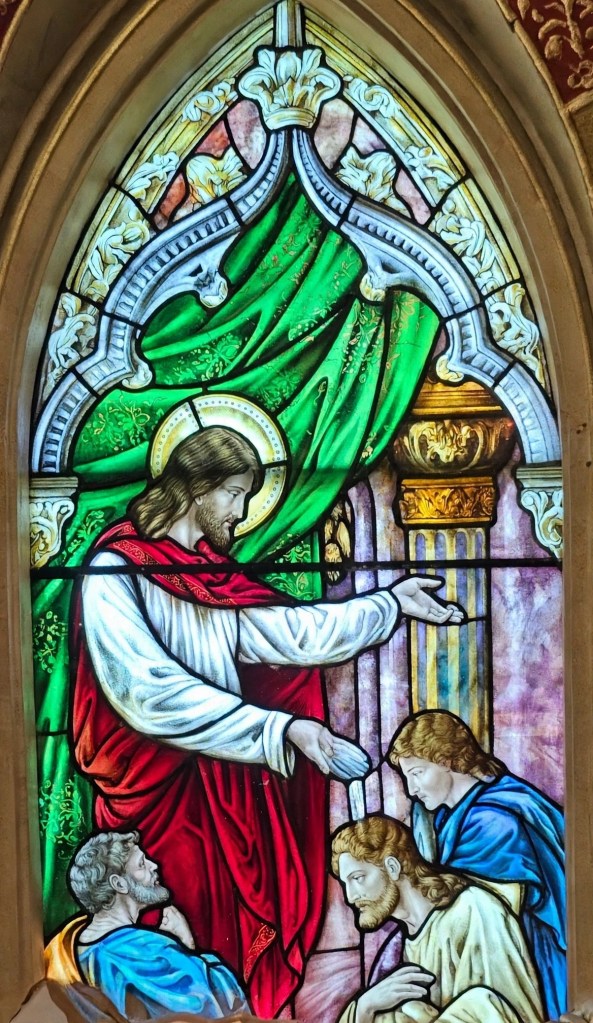
The Stained Glass Ceiling
The metaphorical ceiling of the stained glass was never a problem with the light. Stained glass is beautiful, but it’s most beautiful when light shines through it. Women are not claiming to be the light. Women know they are the “stained glass”.
For centuries men decided how much light a woman was allowed to let shine. It is God’s light shining through her and she is sacred in God’s eyes; not just a baby maker.
Women did not walk out because they stopped believing in the son of God; the light of the world. They walked out because they finally looked up and saw “the light”. No ceiling built by men will ever keep women from their purpose to serve God’s will.
Luke 10:41-42
⁴¹ “Martha, Martha,” the Lord answered, “you are worried and upset about many things, ⁴² but few things are needed—or indeed only one. Mary has chosen what is better, and it will not be taken away from her.”
References
1. Pew Research Center, “Spirituality Among Americans” (survey of 11,201 U.S. adults, July 31–Aug 6, 2023; report Dec. 7, 2023) — 22% of U.S. adults describe themselves as “spiritual but not religious.”
2. Pew Research Center, Religious Landscape Study 2023–24 (report Feb. 26, 2025) — 29% of U.S. adults are religiously unaffiliated (“nones”), up from 16% in 2007.
3. General Social Survey (NORC, University of Chicago), 1972–2021 — adults reporting “no religion”: just over 5% in 1972, about 29% in 2021.
4. Pew Research Center, “New Age Beliefs Common Among Both Religious and Nonreligious Americans” (2017 survey; report Oct. 1, 2018) — 62% of U.S. adults hold at least one of four New Age beliefs; 70% of women vs. 55% of men.
5. Pew Research Center (survey of 9,593 U.S. adults, Oct. 21–27, 2024; report May 21, 2025) — 30% of adults consult astrology, horoscopes, tarot, or a fortune teller at least yearly; 35% of women vs. 18% of men say they believe in astrology.
6. Pew Research Center, Religious Landscape Study 2023–24, religious-switching analysis — among all church leavers, 26–29% cite the treatment of women as an important reason; among former Catholics asked directly, about 40% cite it.
7. Wallenfeldt, Jeff. “Salem Witch Trials.” Encyclopædia Britannica. https://www.britannica.com/event/Salem-witch-trials
8. “Salem Witch Trials Research Guide.” Congregational Library & Archives. https://congregationallibrary.org/salem-witch-trials-research-guide
9. “Salem Witch Trials Documentary Archive.” University of Virginia. https://salem.lib.virginia.edu
10. Karlsen, Carol F. The Devil in the Shape of a Woman: Witchcraft in Colonial New England. New York: W.W. Norton & Company, 1998.


Thank you for stopping by. We hope you enjoyed the content. Feel free to share what brought you here and how we can support you. (Rude comments will be removed).
You must be logged in to post a comment.