
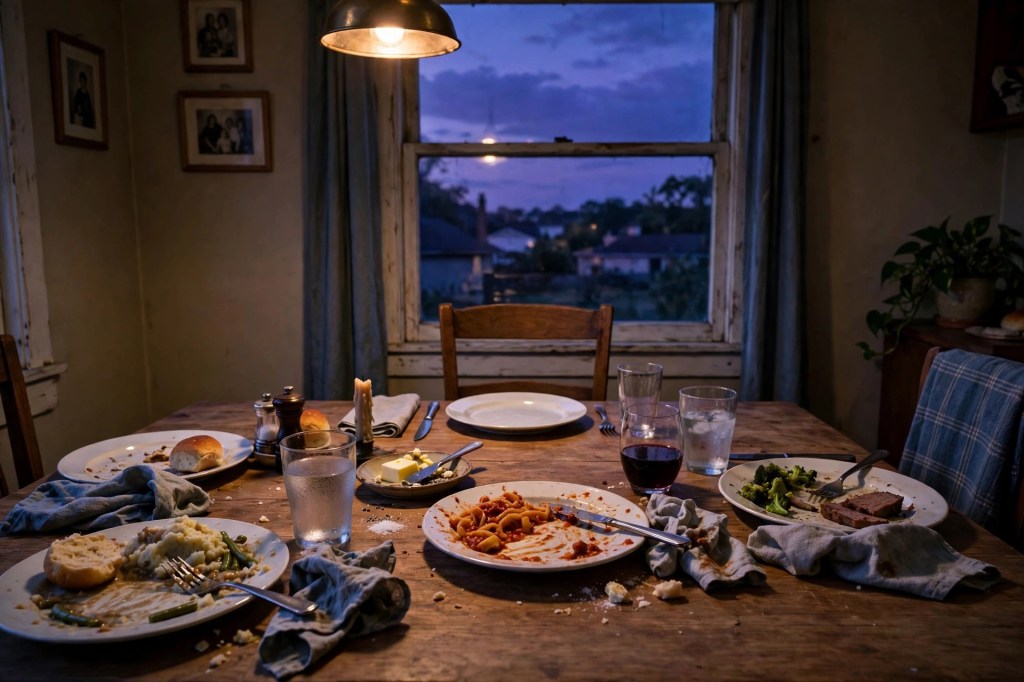
The American Family Crisis
By Noelle Dodge | October 24, 2026 | A World of Wonder Press

Where We Have Been
If you are just arriving, here is a recap of where we have been.
Part 1 was the Dream. A black man with a Bible stood up in America and preached that this country could be better than it was. Dr. King preached equality for all, fathers in the home, mothers honored, and children raised up in faith, love and discipline. He called it the Beloved Community, and he believed it was possible. Part 1 also shared what we failed to recognize in the upbringing of a childhood like Charles Manson’s.
Part 2 followed the Dream home, to the deeply rooted American dream. It closed with three things that were coming for the American family: a welfare system that would raise children in place of their parents, fathers removed from the home, and a faith turned into a cage that would push the family specifically women away from God.
Part 3 highlighted the warning. In 1970, Charles Manson stood in a courtroom and told America: These children that come at you with knives, they are your children. You taught them. I didn’t teach them. I just tried to help them stand up. We called him mad, and we stopped listening. But the system that raised Manson is raising over 300,000 children fifty years later. The Dream was for your children. The warning was for your children. Both were ignored.
That brings us to Part 4. In the 1960s, the trend of fatherless homes was the beginning. What happened next did not happen by accident, and it did not happen all at once. It happened by rule. Rules written in offices, enforced at kitchen tables, that made a father’s presence in his own home a liability to the family he was trying to feed and protect. This is how the knock came to the door.

The Fathers Were Removed and Uncle Sam Became Dad
In 1960, only about 9% to 11% of U.S. children lived in single-parent or father-absent households. Among them 21-22% Black/African American and 9-7% White/Caucasian. Hispanic and Asian were not measured at that time. Today, it is roughly 25% of the homes. 63-66% Black/African, 42% Hispanic, 23% white/Caucasian, and 16% Asian American of lived in single-parent household. Aid to Families with Dependent Children (AFDC) “man-in-the-house” rules, the midnight raids, and King v. Smith (1968) striking Alabama’s substitute-father rule after the roles fell by ~20,000 people, 16,000 of them children. Jencks carries the honest line the system rewarded not marrying. This sets against King’s actual blueprint: the Beloved Community, homes made whole, not managed by the government.
A Census-based analysis of 2022 data puts 21.5% of children living with their mother only and 4.6% with their father only; NCES had mother-only households at 26% in 2019. 3 in 10 American children do not live with two parents and only 46% live with two married parents in their first marriage, down from 73% in 1960.” 1 in 4 children live without a biological, step, or adoptive father in the home, per 2023 Census data. And of America’s single-parent homes, roughly 80% are led by the mother alone.

The demand for two incomes, emasculating the provider, instinct in men and while the fathers were being ruled out of the home, the mothers were being managed inside it.
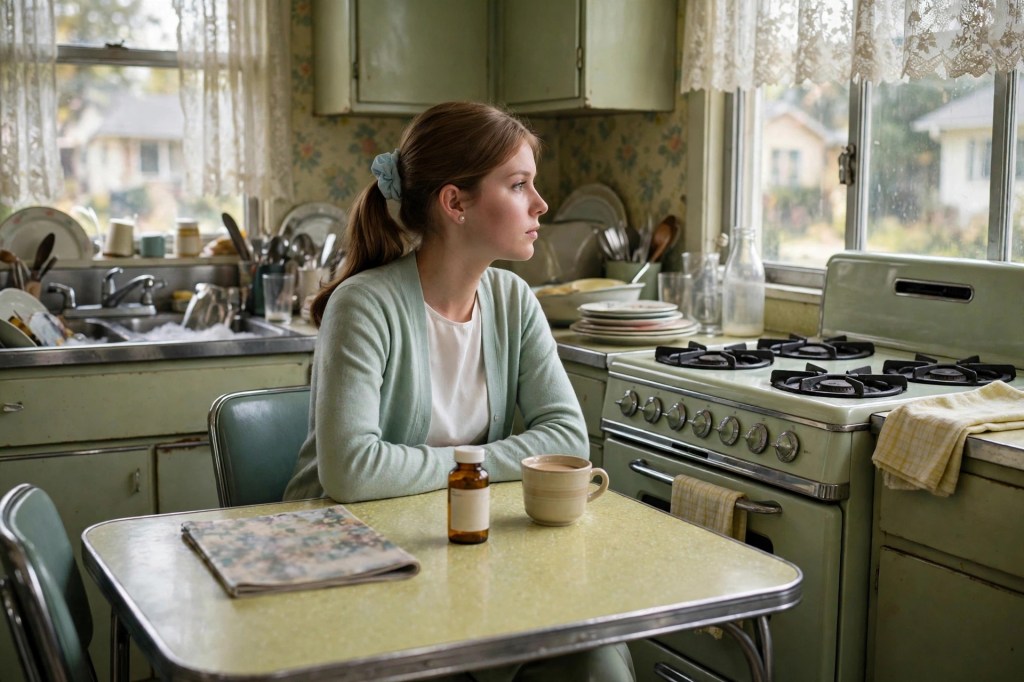
The Women were Never the Villains
In September 1960, Redbook published “Why Young Mothers Feel Trapped,” and thousands of letters came back from women who finally saw their own lives named in print. The culture’s answer to the trapped feeling was not to open the door. It was a prescription pad. Miltown (tranquilizer) arrived in 1955 and thirty-five million prescriptions were written within a year. Valium followed in 1963, prescribed to women at twice the rate of men, eighty-eight million prescriptions at its peak. Read those numbers any way you like; the discontent of a generation of housewives was treated as a chemistry problem, in the woman, by the pill. And we know what the door was worth, because some states finally opened it.
When unilateral divorce became law, researchers Stevenson and Wolfers tracked what happened: female suicide fell by roughly twenty percent. Domestic violence fell by a quarter to a half. Women murdered by intimate partners fell by about ten percent. The researchers themselves called the evidence suggestive. The direction of it has never reversed. Where a woman could leave, she was more likely to live. When states let women leave, female suicide fell ~20%, domestic violence fell by a quarter to a half, women murdered by partners fell ~10% This appeared to be good for women and “empowering”. Until society determine the worth of women’s work. (Census/Women’s Bureau series): In 1960 a woman made 60.7 cents on his dollar 1968, the year King v. Smith struck the rule: 58.2 1973: 56.6 — the lowest point in the whole series 1980: 60.2 1990: 71.6 the movement only comes in the eighties. From 1960 to 1980, twenty years of the fathers being ruled out and the mothers flooding into workforce, her dollar did not move. It went slightly backwards. Uncle Sam became dad, and Mom became the breadwinner at fifty-nine cents on the dollar. And here’s the hinge I didn’t expect: 1973 is both the year her ratio bottoms out and the year men’s real earnings peak. The squeeze is arithmetic, not choices. A working woman earned 61 cents on a man’s dollar in 1960 and sixty cents in 1980, while men’s real pay stalled for a generation after 1973. A woman either tolerated abuse or work for less with government subsidies.

Unaffordable Freedom
When a father is absent from the home, the cascading risks to a child’s developmental and emotional safety are severe and long-lasting. Research tracked by the National Fatherhood Initiative highlights that children in fatherless homes are twice as likely to drop out of high school, a staggering metric when contrasted with the baseline U.S. status dropout rate of 5.3%. Beyond academics, a father’s absence radically accelerates behavioral and environmental risks. The landmark 2003 Ellis longitudinal study revealed that girls whose fathers leave early experience teen pregnancy rates seven to eight times higher than their peers. This vulnerability maps directly to systemic safety gaps. While the CDC notes that 1 in 4 girls and 1 in 20 boys endure child sexual abuse nationwide, girls with both biological parents present from birth carry a measurably lower risk of assault. Furthermore, family structure acts as a stronger predictor of domestic violence exposure than race, income, or education. According to the National Survey of Children’s Health, children living with never-married mothers face a domestic violence exposure rate of 116 per 1,000—six times the rate of intact married families. Amidst an overarching mental health crisis where 40% of high schoolers experience persistent hopelessness and 20% seriously consider suicide, the CDC points to a vital antidote: high parental monitoring and family connectedness significantly lower these baseline risks. Our upcoming center is designed to structurally deliver those exact protective factors, intervening in these multi-generational cycles to provide the stabilizing, whole-family recovery these households desperately need.
While historical shifts have granted women, greater independence and safety from toxic relationships, this progress has come at a systematic and unaffordable cost.
Many mothers now find themselves thrust. Into an unequal, economic landscape earning significantly less than their male counterparts while carrying this singular burden of financial provider, primary care give and homemaker.
Even with child support, many women struggle to make ends meet and don’t qualify for government assistance. As Father’s frequently move on to build new lives, supporting a second family, the single mothers are left to shoulder responsibilities of two parents with a fraction of the resources.
The tragic irony is that, in escaping one set of vulnerabilities these women and their children are exposed to new systemic risks due to a lack of institutional support.
Awakenings would bridge this gap by stepping into provide the structural scaffolding, community care, resources these mothers need to protect their children and build an equitable future.
The Grand Master Plan
The child welfare system frequently perpetuates the very trauma it is designed to prevent. First, a father’s toxic behaviors destabilize the home. Then, an under-resourced mother is systematically priced out and worn down by the impossible economics of solo caregiving.
There was a time when a dual income was an option for building wealth; today, it is simply the price of rent. Over the last few decades, macroeconomics structurally forced mothers into the workforce, with participation rates for moms of young children surging from 39% in 1975 to over 75% today. This shift left an immediate structural gap. With the corporate workday and the school day misaligning by up to 25 hours a week, and center-based care devouring a staggering 35% of a single parent’s income, mothers are forced into an impossible trade-off: work the shift or supervise the children. Rent always wins. Consequently, over 11 million school-age children are left unsupervised after school—including 800,000 elementary kids home alone. The fallout is measured in real-time between the hours of 3:00 and 6:00 p.m., the peak window for juvenile crime when an empty house means the streets do the raising. Long before these families ever see a courtroom, the marriage is already fracturing under the chronic stress of survival. When it finally breaks, the father exits the protective role, leaving the mother to absorb 100% of his load on a fraction of his pay. Left in an endless survival loop, she is too depleted to maintain the constant vigilance her children need. No one is teaching the kids Dr. King’s faith, love and discipline, and the kids are now vulnerable, ready for the taking.
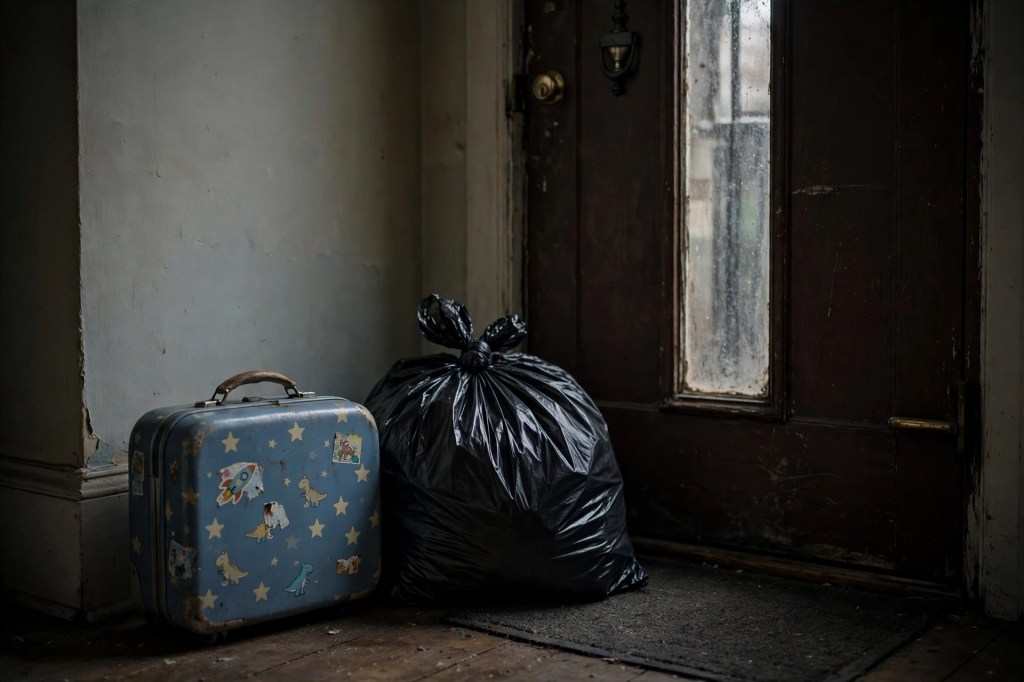
The Invitation to the Child Welfare System
The ultimate tragedy occurs when the state uses a mother’s unsupervised home; due to her need to financially supporting it, as an indication for neglect.
The State removes the children, placing them with strangers in a fractured foster care system where they face a drastically elevated risk of trauma and abuse by strangers, all heavily subsidized by taxpayer dollars.
The public perception of the foster care system is that it serves as a rescue network for severely battered children. The data, however, tells a radically different story. According to the federal Adoption and Foster Care Analysis and Reporting System (AFCARS), of the nearly 187,000 children removed from their homes in a single fiscal year, 62% were taken strictly under the classification of neglect, while physical and sexual abuse accounted for just 13% and 4% respectively. By fiscal year 2024, national data revealed that a staggering 87% of removals did not involve even an accusation of physical or sexual abuse. The reality is stark: our child welfare system does not primarily rescue beaten children.
Instead, it institutionalizes unsupervised, under-resourced ones. Our rehabilitation center aims to shift the narrative and the funding, proving that these families do not need the trauma of state-enforced separation—they need the stabilization of economic and community resources.
Illinois ran the strictest version of this system in the country, and the state’s own numbers expose the tragedy of its design. In a single year, 171 children tied to DCFS died, including 26 who lost their lives while trapped directly in state care, hitting a 20-year high. Over 25,000 children passed through this foster system in fiscal year 2024. This didn’t happen by accident; it was written into the law. For decades, Illinois was the only state in the nation that branded a mother a criminal if she left a child under the age of 14 alone for an ‘unreasonable period.’ It meant a mother in Wilmette faced an investigation because her eight-year-old walked the dog around the block. It meant a mother in Chicago spent two long years fighting to clear her name because she let her boys play at the playground beneath her own window while she watched. Think about the arithmetic: the state removes the father by regulation, removes the mother by economic exhaustion, and then knocks on the door of the empty house, calls it neglect, and pulls those kids into the very system that raised Laquan McDonald. They take these babies from their mothers in the name of ‘safety’—but court-monitored counts show children are abused inside the foster system at nearly twice the national average. The infants and toddlers aged zero to two are the ones paying the highest price, suffering the worst rates of abuse in unlicensed homes. We do not need a larger system to process broken families. We need a dedicated center that stops breaking them in the first place.
The state of Illinois tears families apart under the banner of protection, but its own ledgers tell a hypocritical story. In fiscal year 2023, the state’s court-appointed monitors clocked substantiated abuse and neglect inside substitute care at 15.8 per 100,000 days. Let that number sink in: children in Illinois foster care are abused at nearly 1.7 times the national rate. The system is missing its own bare-minimum safety target of 9.0 by a mile. We are running a machinery that punishes an exhausted, under-resourced mother by taking her kids away, only to place them in state-funded environments that are statistically twice as dangerous as the national average. The alternative, is to stay in an abusive unhealthy marriage. We don’t need to build bigger holding cells for children. Our family rehabilitation model represents the fiscal and moral correction Illinois desperately needs, directing public funds into stabilizing biological homes rather than funding institutional stagnation. The state needs to invest in rehabilitation programs that protect the family, stabilizes the home, and keeps children out of a system while actively keeping them safe.
Ill or Annoyed: Eight Years of the Mental Health Governor
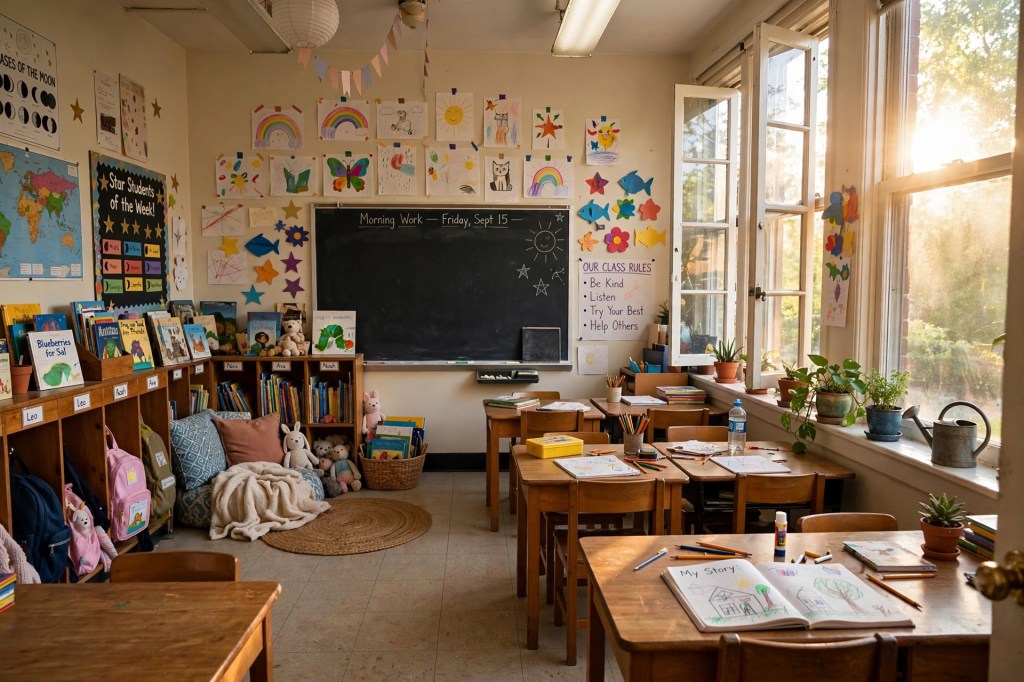
Since 2020, I have been saying “in Illinois, you are either ill or annoyed.” In 2018 J.B. Pritzker was elected and took office in January 2019. He is now running for a third term. For eight years, he has made mental health his signature his brand, his cause, the thing he prides himself on. After eight years of the mental health governor, Illinois is the state where you are either ill or annoyed. That was a joke in 2020. It isn’t funny anymore, it’s a diagnosis of the system in Illinois.
The Brand
The brand is real. That is what makes the contrast work, because nobody can say he never tried.
In July 2025, he signed Senate Bill 1560, making Illinois the first state in the country to mandate annual mental health screenings for public school students, grades three through twelve, beginning in the 2027–28 school year. His own words at the signing: “This is a national first that’s worth celebrating.” He said it is important to treat mental health as a priority, like physical health.
In September 2026, he directed $768 million from the Meta settlement toward youth mental health, expanding 988 and text-based youth crisis lines, a digital wellness fund, youth mental health programming, choosing that over filling Chicago’s education shortfall.
Before that: the Community Emergency Services and Support Act of 2021, sending behavioral health responders instead of police to mental health crises. A Behavioral Health Workforce Center to recruit and train professionals. A 988 lifeline the state kept whole, including its youth subnetwork, after the federal government cut funding for it.
He did not inherit a mental health platform. He built one. Every Illinois schoolchild is about to be screened for mental illness by the state. Remember that, because it matters at the end.
The Money
Nobody can say he starved the system, either. The Department of Children and Family Services budget nearly doubled under him, from $1.22 billion in fiscal 2019 to $2.04 billion in fiscal 2025, with a $2.49 billion request for fiscal 2027. Headcount rose to its highest in fifteen years. The hotline backlog fifty to five hundred complaints a day was eliminated.
The Record
While the rest of the nation structurally optimized its child welfare systems to prioritize family preservation, Illinois spent double the capital to maintain a status quo of family separation. From 2019 to 2024, the number of children trapped in foster care nationwide dropped every single year, falling twenty-three percent from 425,974 to 328,947. Illinois went the other way. It was one of only seven states whose foster population rose in 2020, and one of only three whose active entries spiked from 6,709 to 7,837 while national entries fell. The state’s foster population peaked at a staggering 21,086 in 2021 before returning to 18,524 in 2024—essentially right back where it started. This is what double the taxpayer money bought: eight years, a doubled administrative budget, and a foster population completely unchanged, while the rest of the country emptied their systems by nearly a quarter. Our family rehabilitation model represents the fiscal and moral correction Illinois desperately needs, directing public funds into stabilizing biological homes rather than funding institutional stagnation.
And the children inside that care are less safe than the national average. The University of Illinois’ Children and Family Research Center, monitoring under the B.H. consent decree, puts Illinois substantiated maltreatment in substitute care at 15.8 per 100,000 days in fiscal 2023 roughly 1.7 times the national rate, and still well above DCFS’s own goal of 9.0. The youngest children, ages zero to two, are at the highest risk.
In 2022, a Cook County judge repeatedly held his DCFS director in contempt nine cases for the “stuck kids”: children held in psychiatric hospitals beyond medical necessity, behind locked doors, most of the day, without schooling, because the state could not find them a placement. The average days a child sat past discharge grew from fifty-five to eighty. An appellate court later vacated the contempt citations. The director stepped down at the end of 2023. We are paying taxpayer dollars to turn psychiatric wards into holding cells for kids who have done nothing wrong except trust a state that has nowhere to put them. We don’t need more locked doors. We need an open door to a family village that heals them. Our family rehabilitation center directly addresses this deficit, creating the protective, non-institutional spaces these children and their families desperately need. Awakenings provides a critical, community-level intervention designed to bypass this failed institutional pipeline entirely.
How deep does the rot go? Look at what happened in September 2026. The Illinois Auditor General released a performance report on Ta’Naja’s Law. That law is named after Ta’Naja Barnes, a beautiful two-year-old baby girl from Decatur who died a horrific, agonizing death from starvation and hypothermia in February 2019 just months after DCFS workers closed her file and sent her back to her mother. To ensure no other child suffered her fate, the legislature passed a law requiring a strict, mandatory home safety checklist before any foster child could be returned home. Yet, seven years after that baby died, the state auditors pulled fifty random files. Out of 399 safety checklists that legally should have been signed and filed, DCFS was missing 329 of them. An eighty-two percent failure rate. Think about that. The state can find the resources to track down a struggling mother, take her children, and funnel them into a foster care system where they are abused at twice the national rate. But when it comes to producing the single sheet of paper that says a home is safe for a child to return to, the system fails four out of five times.

The Punchline
A government that treats everything as a mental health crisis will make sane people frustrated and frustrated people unwell.
That is the whole story of Illinois under its mental health governor. A state that will screen every schoolchild in Illinois for mental illness, while the children already in its own care cannot get a safety checklist completed before they are sent home. A state that doubled the budget of the agency that loses the paperwork, holds the children in hospitals past the point of medicine, and watches abuse run at nearly twice the national rate inside its own placements.
The state diagnoses the children, fails the children it already has and blames the mothers.
I said it in 2020 as a joke. I am saying it now as a fact: in Illinois, you are either ill or annoyed. The only question is, which one the next four years will make of you.
The Gilded Cage
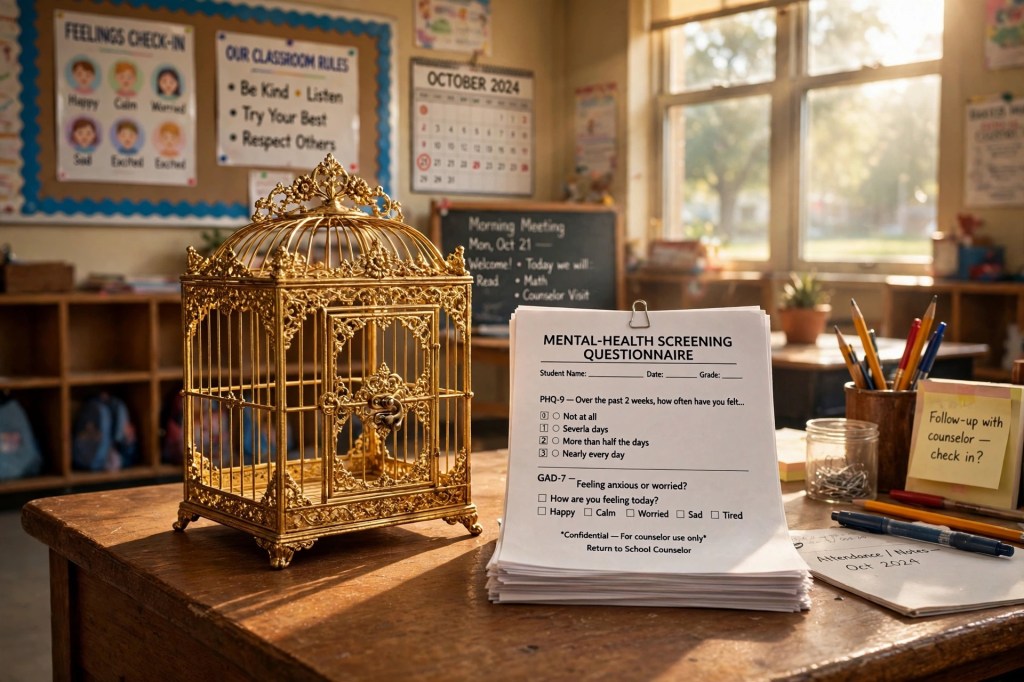
The gilded cage sits on the teacher’s desk now, and that is not a metaphor anymore. In Illinois, education personnel are the single largest source of referrals to DCFS 24.57% of all referrals, ahead of law enforcement at 23.10%. Teachers are the gatekeepers. They see the children every day, and the law requires them to report on reasonable cause. In fiscal 2025, the hotline took 238,169 calls, which became 78,096 investigations covering 122,133 alleged child victims.
And now the gate gets wider. Beginning in the 2027–28 school year, every public school student in grades three through twelve will receive a state-mandated mental health screening, the first law of its kind in the country. The screening hands the gatekeeper a form. And even the reports that never become investigations still count: only about 27% of hotline reports now result in one, while the rest are redirected as child welfare referrals. The file opens either way. The cage doesn’t need bars when the paperwork does the holding.

Paris Gave A Shout Out to The Train Wreck
Paris Hilton got out, and then she did what almost no one in this system gets to do: she took the microphone and named the trainwreck out loud. She stood before a congressional committee and described the absolute terror of being violently restrained, stripped naked, and thrown into solitary confinement while the state looked the other way. Her voice carried the Stop Institutional Child Abuse Act all the way to a historic legislative victory, forcing federal sunlight into the dark corners of residential youth facilities. And the real-world fallout of that fight came to a head when state regulators finally pulled the licenses and permanently shut down the doors of Provo Canyon School.
We need that exact same unfiltered, uncompromised voice right here in Illinois. We need to look at a state system that doubles its budget just to keep 18,000 kids trapped in neutral, that leaves children locked in psychiatric wards for 80 days past discharge, and that fails to produce four out of five safety checklists for the babies it returns home—and we need to call it what it is: a taxpayer-funded disaster. We don’t need a bigger bureaucracy to monitor the abuse. We need to build a village that protects the mother, saves the child, and breaks the cycle for good.

Families who practice Christianity
When evaluating the stability of the family unit, the headline isn’t the religious label—it is the active practice. While general statistics from the General Social Survey indicate a modest gap between Christians who have divorced (42%) and the religiously unaffiliated (50%), a deeper analysis reveals a stark divide.
Let’s tell the truth about the modern family: if you look beneath the surface, the numbers tell an entirely different story. Among evangelicals, sixty percent of those who never set foot in a church end up divorced, while weekly attenders drop to thirty-eight percent. Sociologist W. Bradford Wilcox nailed the reality: an active, church-attending conservative Protestant is 35% less likely to divorce than a secular American. But a nominal one—someone who claims the title but doesn’t live it is 20% more likely to divorce than someone with no faith at all. The name without the practice is worse than no name at all.
And let’s be incredibly clear about the human cost of this statistic: the women were never the villains for leaving. The name without the practice is worse than no name at all. This distinction changes how we view family breakdown. The women who leave toxic or indifferent environments are not the villains of this story; the machinery of nominal faith is. True faith is meant to be a covenant of mutual protection, not a sentence of captivity. We must place the blame squarely on the rigid systems and the men who make faith feel like a cage and like Adam, blame it on God and the women who have the courage to walk out of the cage.
Faith was designed to be a covenant of safety and mutual respect, not a prison of captivity. The blame belongs entirely to the broken systems and the men who weaponized the label of faith to turn a home into a cage never to the women who had the strength to pack up and walk out of it. The church that shames the woman for leaving pushing her out of the church and away from God while New Age practices and Yoga classes are welcoming single women with open arms and hearts. Opening doors and windows to the enemy to target the children and into the arms of the broken DCFS system.
We are building a center that stops hiding behind titles and starts doing the raw, honest work of building a safe village with the principles and values Dr. King promoted.
Our family rehabilitation center is built on this exact distinction: we offer practical, lived community scaffolding that actually keeps families safe and whole. Our organization focuses entirely on behavioral and structural practices rebuilding parental monitoring, safety networks, and communication systems to transform theoretical stability into measurable family preservation.
Awakenings Family Rehabilitation Resort & Spa believes in family preservation and healing, ensuring that public resources are used to build protective villages rather than financing systemic separation.
References
1. U.S. Census Bureau, Census-based analysis of 2022 data — 21.5% of children living with their mother only, 4.6% with their father only.
2. National Center for Education Statistics (NCES) — mother-only households at 26% in 2019.
3. U.S. Census Bureau, 2023 — 1 in 4 children live without a biological, step, or adoptive father in the home.
4. Pew Research Center — 46% of children live with two married parents in their first marriage, down from 73% in 1960.
5. Redbook, September 1960 — “Why Young Mothers Feel Trapped.”
6. Stevenson and Wolfers, research on unilateral divorce laws — female suicide fell by roughly 20%, domestic violence fell by a quarter to a half, women murdered by intimate partners fell by about 10%.
7. Ellis, Bruce J., et al., Child Development, 2003 — father absence and teen pregnancy: 7 to 8 times higher when the father left early, 2 to 3 times higher when he left later, about 5 times higher in the U.S. sample after controls.
8. McLanahan / National Fatherhood Initiative — school dropout about 2 times higher for fatherless children.
9. * Substance Abuse and Mental Health Services Administration, National Household Survey on Drug Abuse, 1997 — adolescents living with only their mother 1.9 times more likely to report marijuana use than two-parent teens.
10. * Female-to-male earnings ratio, year-round full-time workers — 1960: sixty-one cents on a man’s dollar; 1980: sixty cents.
11. U.S. Department of Health and Human Services, Adoption and Foster Care Analysis and Reporting System (AFCARS) — children in foster care fell from 425,974 in FY2019 to 328,947 in FY2024 nationally, while Illinois rose against the trend.
12. Illinois Department of Children and Family Services, FY25 Fast Facts — 238,169 hotline calls; 78,096 investigations; 122,133 alleged child victims.
13. Nadon et al., Child Abuse & Neglect, 2023 — 2008–2018 national comparison of referral sources: education personnel 24.57%, law enforcement 23.10%.
14. Illinois DCFS commission minutes, July 2025 — about 27% of hotline reports result in investigations.
15. Illinois Child and Family Research Center (CFRC), B.H. consent-decree monitoring — substantiated maltreatment in substitute care, 15.8 per 100,000 days in FY2023, versus a national rate of about 9.07 and DCFS’s own goal of 9.0; children ages 0 to 2 at highest risk.
16. Illinois Auditor General, September 2026 — Ta’Naja’s Law audit: DCFS could not produce 329 of 399 required checklists, an 82% deficiency.
17. Ta’Naja’s Law, Illinois, 2020.
18. Cook County Circuit Court, 2022 — DCFS director held in contempt in nine “stuck kids” cases; the director stepped down at the end of 2023.
19. Illinois DCFS budget — $1.22 billion (FY19) to about $2.04 billion (FY25).
20. Illinois Senate Bill 1560, signed July 31, 2025 — first state to mandate annual mental health screenings for grades 3 through 12, beginning in the 2027–28 school year, with parental opt-out.
21. Meta settlement, September 2026 — $768 million directed to youth mental health in Illinois.
22. Community Emergency Services and Support Act (CESSA), Illinois, 2021.
23. Paris Hilton, This Is Paris (documentary, September 14, 2020); Stop Institutional Child Abuse Act, signed December 23, 2024 (Public Law 118-194).
24. Wright, University of Connecticut, General Social Survey analysis — Christians about 42% ever-divorced, versus 50% of the unaffiliated.
25. Wilcox — active conservative Protestants 35% less likely to divorce; nominal conservative Protestants 20% more likely to divorce than secular Americans.
26. * Ellison and Anderson, 2001, National Survey of Families and Households — regular religious attendance inversely associated with domestic violence perpetration; the protective effect for men only at weekly attendance.


Thank you for stopping by. We hope you enjoyed the content. Feel free to share what brought you here and how we can support you. (Rude comments will be removed).
You must be logged in to post a comment.