
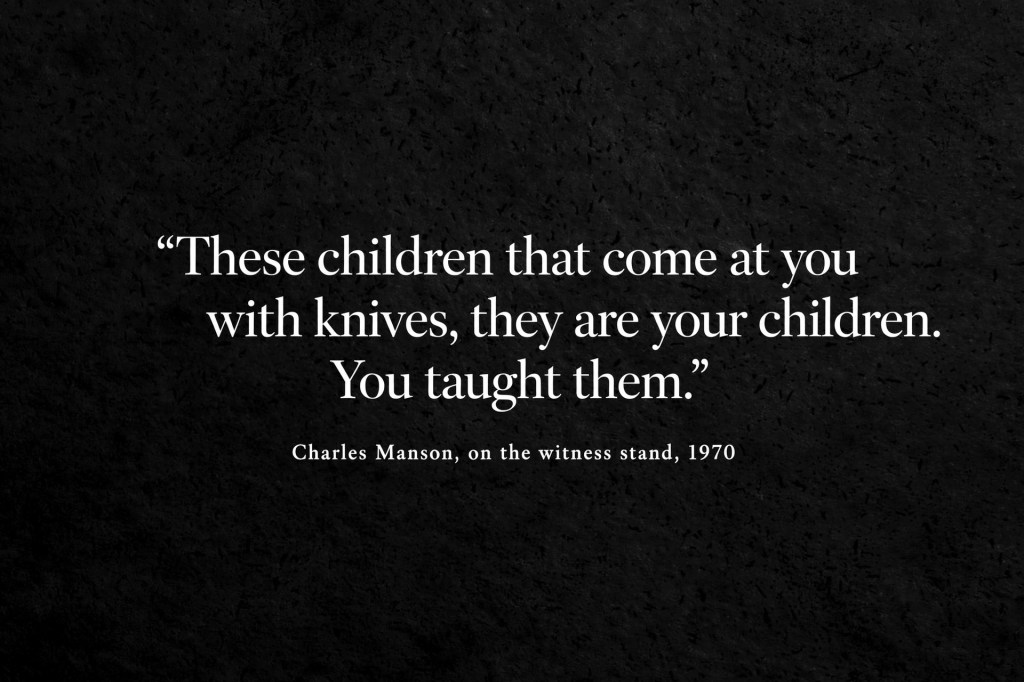
A Mad Warning No One Heard
By Noelle Dodge | October 20, 2026 | A World of Wonder Press
It’s highly controversial to make this statement but, I think once you read this article, you’ll understand why I’m saying it. Charles Manson may have been warning us when he made that statement from the November 20, 1970 trial.
According to prosecutors, psychologists, media and biographer’s own documentation, it was well-known that he used extreme psychological manipulation, isolation, and dominance to command his followers.
Reporters covering the story reported his statement as shifting blame toward the parents and institutions of the middle class. It was not taken as a warning to the middle class. A warning that the children were at risk of being institutionalized by government-run institutions, with the full permission of the parents. That flew right over everyone’s heads.
The public interpretation was that Manson was trying to gaslight America and deflect from accountability. When it is quite possible that he was holding the system accountable.
Why would Dr. Martin Luther King be preaching a civil rights movement rooted in family values, forgiveness, and non-violence if that was already the social norm at the time? Why would we need someone locking arms, marching in the streets, telling us to keep the family together and treat all people as equals? And why was that preaching man, being monitored by the CIA and FBI and flagging him as a threat to the United States government?
Maybe the mad man had a point and the fear of him being correct made people not want to hear it.
Manson’s public philosophy was a dual framing, masterfully walking a line where to his followers, he was an absolute messianic savior, but to the public and the media, he explicitly framed himself as a mirror, reflection of society’s own rot and institutional failures.
The public and the media overwhelmingly saw his rhetoric as the manipulative lies of an evil cult leader, rather than a legitimate social critique from a man begging not to be released into society. Society chose “evil cult leader” because the alternative was having to look at itself instead.
As we discovered in the first article, March of 1967, before the murders, Manson formally asked to remain in prison and was released due to no legal right to hold him. He knew society wasn’t safe with him in it and his words were a warning that society wasn’t ready to hear. They called him crazy and released him into the public. He was sane enough to know, the public wasn’t safe with him in it and wasn’t monitored like a black man with a Bible. The contradictions also flew over everyone’s heads. Just because he was dangerous to society, doesn’t mean he wasn’t trying to warn people of the dangers in traumatizing and institutionalizing children.

Laquan’s story doesn’t start on Pulaski Road.
The events on the night of October 20, 2014, unfolded in a span of roughly 10 minutes. His life was bigger than that and his story begins before then. He wasn’t just a headline as another noncompliant thug on the street. He was ours. We raised him. He was a ward of the state of Illinois. The state that insisted on raising him.
McDonald was a barely 17-year-old student at Sullivan House School, an alternative charter school on Chicago’s south side where he was making a positive turnaround. According to school principal Thomas Gattuso, McDonald regularly earned A’s and B’s in his classes. Teachers noted that he frequently arrived early to school, was happy, formed close bonds with staff, and was quick to offer hugs and smiles. He had no disciplinary issues, never got into trouble, and showed a genuine initiative to get his life on track. Through the school’s program he was paired with a dedicated adult mentor who helped guide him. Shortly before his death, he had just completed his 30-day probation period. He had only been at Sullivan House a matter of weeks and the people who worked with him liked what they saw. Principal Gattuso called him outgoing and funny, a kid who showed up every day and wanted to get his life on track. The OIG reports tell the other half: two suspensions in the same short window. It is unclear if his suspensions were related to court issues since the school is claiming he had no disciplinary issues and was getting good grades. Both reports can be true. That was Laquan’s life story in miniature. The boy the adults saw, and the report file that the system kept on him. Who he was, and how he was coping to survive a system that fought him at every turn, was a constant battle.

Prior to this, it was reported McDonald had learning disabilities and was diagnosed with complex mental health problems. Through his adolescence, McDonald cycled through the juvenile detention system. Juvenile arrest between April 2011 to July 2014.
These arrest primarily consisted of possession of small amounts of controlled substances. Specifically marijuana, cocaine, and heroin. His joint hearing between delinquency and child welfare, was his final release to his uncle in May 2014.
McDonald was a second-generation ward of the state. According to protection records, released by the Chicago Tribune and the Illinois Department of Children and Family Services (DCFS), Laquan’s childhood was marked by rapid traumatic instability.
As a toddler he endured cruelties that would take most people a lifetime to overcome. He had a highly unstable upbringing, spending much of his life in foster care. But, that wasn’t his identity and it wasn’t his personality. Because he was walking alone in an industrial area, there is no public timeline tracking his location or interactions in the hours immediately preceding the 9:45 PM incident, and there are no clear answers as to what he was struggling with that day.
The Resident’s Testimony
A local resident (Yvette Patterson) testified that she encountered McDonald sitting on her home’s outdoor stairs early on October 20, 2014 at around 3 am (roughly 19 hours prior to his death). She noted that his behavior was concerning enough that she felt compelled to call the police.
Patterson testified about her encounter with Laquan McDonald. She stated that she arrived at her home and found McDonald loitering near her car and sitting on her outdoor stairs. She did not know him at the time (his relatives lived next door).
Patterson testified that they briefly interacted, saying, “Me and him were just laughing and talking.” She stated that he asked her a strange question, but she explicitly noted that he was not aggressive and that she “wasn’t in fear at all.” Her testimony wasn’t contradictory. She called the police strictly as a precaution because she did not recognize him on her property late at night. She then spoke to him after calling the police. She even described him during the trial as seeming like a “nice young guy.” During this 3 am encounter, he admitted to the police he was high, they talked about taking him to Mount Sinai for observation and let him go because she declined to sign a complaint. While Patterson’s 3:00 a.m. call did not depict an aggressive individual, almost 19 hours later, just before the shooting a separate 911 call at 9:45 PM by truck driver named Rudy Barillas reported something different.
“These children that come at you with knives.”
In a Los Angeles courtroom in 1970 a madman told the country “these children that come at you with knives, they are your children. You taught them. I didn’t teach them.” Lands differently, 44 years later; more like a tornado siren going off while everyone steps outside to look at the funnel coming straight at them. Manson was raised in boys schools and institutions just like Laquan McDonald, October 20, 2014, in Chicago Illinois, that warning unfolded like a prophecy, minute by minute.
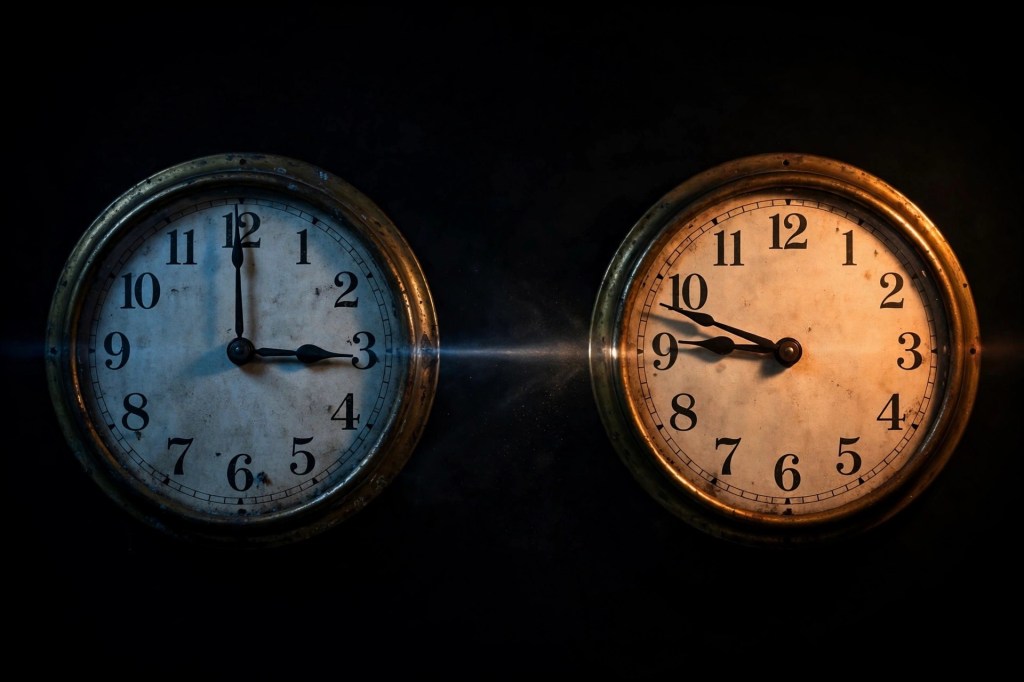
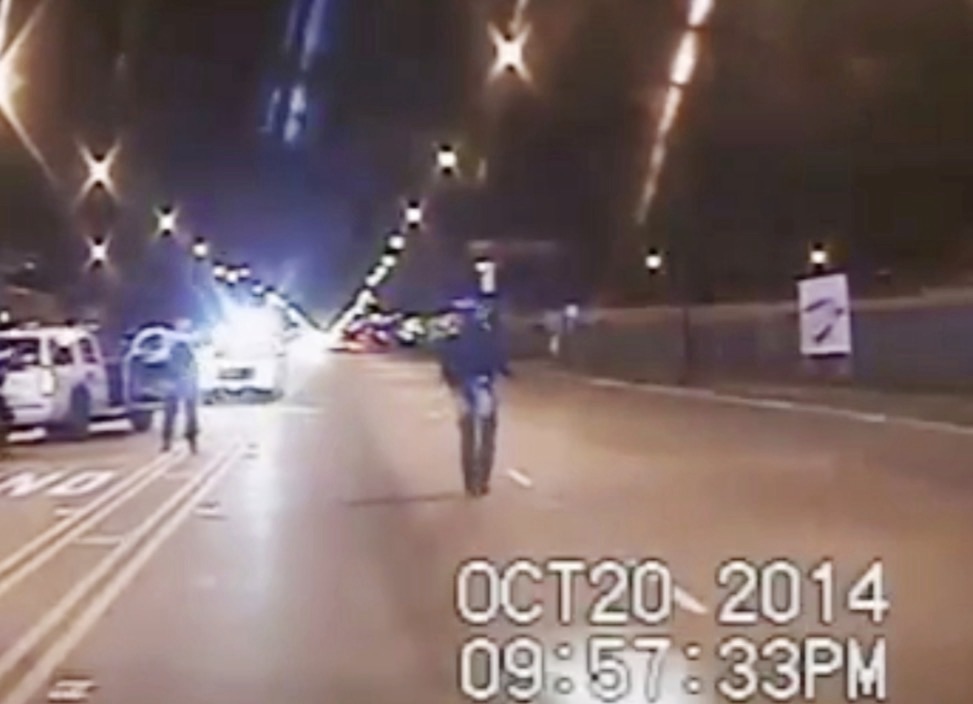
9:47 p.m.: Chicago Police Department dispatched a call regarding a man breaking into trucks and stealing radios, 17-year-old Laquan McDonald was spotted carrying a small folding knife.
9:53 p.m.: Responding officers tracked McDonald as he walked along the streets, noting that he was armed with a knife and did not comply with orders to drop it.
9:56 p.m.: McDonald reportedly used that knife to slash the tire of a police squad car near 40th Street and Pulaski Road as officers trailed him.
9:57 p.m.: Officer Jason Van Dyke, who had just begun his shift at 9:00 p.m. and arrived on the scene with his partner, stepped out of his police vehicle. Within seconds of exiting the car, Van Dyke opened fire on McDonald, eventually shooting him 16 times while McDonald was walking away down the street.
9:58 p.m.: Officers equipped with a Taser arrived at the scene, forty-two seconds after Van Dyke’s first shot. The officers who had been following McDonald, testified they were holding back, waiting for a Taser unit. First officer Joseph McElligott: “We were just trying to be patient.”
The system insisted on raising him.
Laquan McDonald was born on September 25, 1997 to a 15 year old mother who was a DCFS ward of the system herself. The system raised Tina first, then her son. Charles Manson’s mother was age 16 when he was born. He was only 5-yrs-old the first time she was incarcerated. She served 3 years of a 10 year sentence. As an elderly man, Manson claimed that his only happy childhood memory was his mother hugging him when she was released from prison, (he was age 8) after spending those three years with very strict relatives. She abandoned him shortly after.
For Laquan, his mother was 14 when she became pregnant. The State took her into protective custody months earlier. Because of her caregivers drug problems. She gave birth with both of them already in the system. At age 3, just weeks before Christmas in 2000, Laquan’s eight month old sister suffered severe, accidental radiator burns on her legs while the children were unsupervised. A then 18-year-old Tina Hunter, was accused of being high, and the children were removed from her placement and care. He was shuttled to five homes within the first five years of his life. A 2003 report indicated sexual abuse in a foster home, he was age 5. Who’s to say if the lives of two families on October 20, 2014 would have avoided tragedy if an accidental radiator burn was intervened with supervision, parenting support, and education and substance abuse counseling rather than placing him in a home where he would be sexually abused by strangers.
Laquan‘s first five years of life were continuous experiences of abuse and neglect while in the system.
He was later placed with his great-grandmother Goldie; guardianship finalized in 2008 with a $422 a month subsidy and designated backup caregiver. He found stability. In his great grandmother‘s home. Goldie died three years later in August 2013 just 14 months before his death. A backup caregiver was never contacted. According to the Chicago Tribune, at age 15 Laquan described his chaotic early childhood years to a juvenile court clinician, during a psychiatric evaluation.
It was reported that Laquan was hospitalized at Hartgrove Hospital in 2011, a psychiatric facility in Chicago’s Austin neighborhood owned by Universal Health Services. That same year, a review DCFS itself commissioned, from experts at the University of Illinois found that children inside Hartgrove faced an “unacceptable risk of harm”, more than 100 reports of physical and sexual assaults in roughly six months. DCFS kept sending children there anyway, including children already cleared for release. What Laquan himself endured inside, the record does not say. His hospital chart has never been released.
The diagnosis that finally named what was wrong with him came from the opposite kind of institution. At the Bobby E. Wright Comprehensive Behavioral Health Center in East Garfield Park — Chicago’s only African American operated community mental health center, serving the West Side since the 1970s. Therapist Jennifer Forbes diagnosed McDonald with PTSD tying it to the sexual abuse he reported in foster care at age five, along with cannabis dependency and chronic grief. Individual and family therapy began there in January 2014. By the end of October he was dead. Even that diagnosis survives only in a letter from the family’s attorney, because the clinic’s records have never been produced either. He was referred to the dual system program at LCFS regeneration (Lutheran, children, family services of Illinois) where an intake was completed, but sessions never began. A three month gap in services occurred partly blamed by a lack of transportation, he needed to travel 14-miles train-to-bus with no transportation provided. Residential substance treatment was never even attempted.
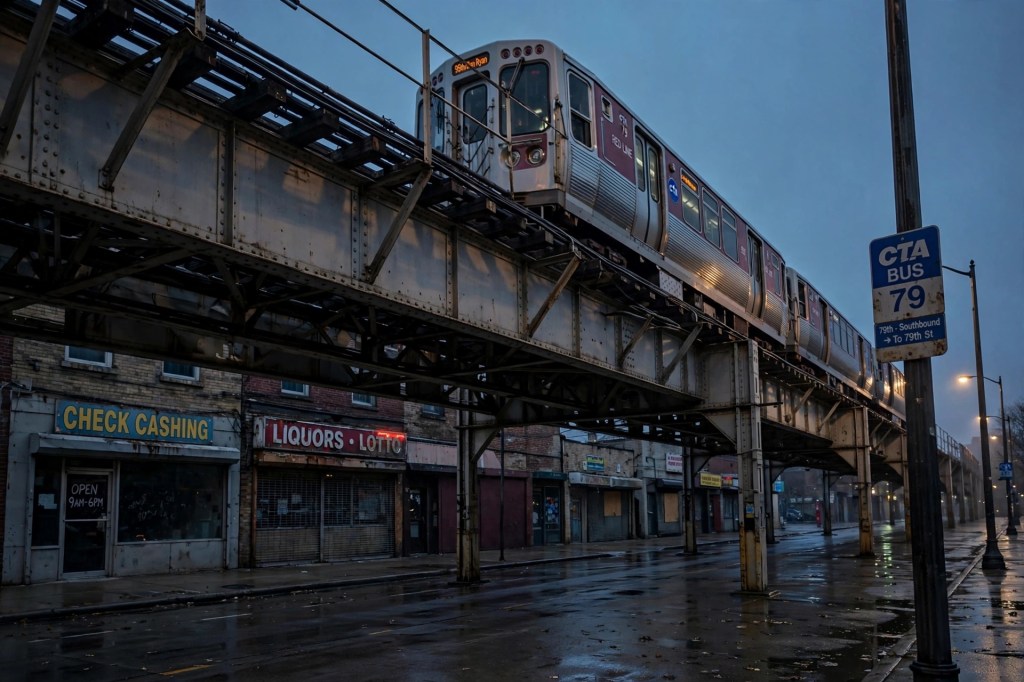
Tina was put in the system at age 14 due to her caretaker’s drug use, Laquan and his eight-month-old sister were removed from their mother’s placement and care over her drug use, and now, Laquan was using it to cope.
Three generations using substances that keep trapping them into a system that gives them reason after reason for the need to cope.
The PTSD diagnosis tied to the sexual abuse at age 5, chronic bereavement, and trauma. So, few people were surprised when he grew into an often angry teen who embraced the drugs and gangs that made up the brutal landscape of his West Side neighborhood. Like most PTSD sufferers, his cannabis dependency was a form of self medicating. His own treatment plan for coping was marijuana because he couldn’t find an alternative more reliable. It was the only solution he knew that worked and that he had access to with instant relief. No transportation issues, no human creating obstacles, and no talk therapy; just relief. The teen explained to a court clinician tasked with the teen’s evaluation, describing why he used marijuana every day. It gave him a calmness, that suppressed his anger, allowing him to keep a constant “smile on my face.” Cannabis does reduce fight flight freeze response primarily through Cannabidiol (CBD) and THC, which interact with the bodies natural endocannabinoid system.
It lowers stress hormones and dampens hyperarousal. A mood stabilizer can take up to 4 to 8 weeks to take effect. The problem with a teenager using cannabis for a self medication treatment plans, is in teenagers developing brain, it can trigger psychosis.
The toxicology report from his autopsy revealed that he had PCP (phencyclidine) in his system. It did not contain the two medications he had been prescribed by a professional; a mood stabilizer and an antipsychotic. The drug nobody prescribed him was in his body.
Illinois Department of children and family services (DCFS) can investigate and indicate a parent for medical neglect when failing to administer prescribed psychotropic medication to a minor. When a child is its own ward and can refuse their own medical and medication treatment, the state holds the consent pen itself, its own rule 325 makes DCFS the authority that approves and monitor those medications. The monitor was the guardian and the guardian was the State of Illinois.
Nine months – this time she lost her baby.
The woman who gave him life, petitioned for her son in October 2013, a year before his death. January 2014, just nine months before her son was killed a court found her “unable” and denied her petition. The system that raised her, found a mother who saw her son in crisis, unable. It is hard to appear or stay stable when you know your son‘s in crisis and the people fighting you are the ones saying you’re unable and creating the trauma for your son.
He was released from juvenile detention in May 2014 and was dead on Pulaski Road by October 20, 2014.
Manson filed that warning as a former ward of the state himself, and knew the system better than the system itself. At age 83, he spent nearly 55 of those 83 years inside of that system and eventually died in it. He warned society, “You taught them. I didn’t teach them.” America heard a madman. But, look who raised him; the system.
Part 4 – we explore how fathers were removed from the home and government became the man of the house. We will dive in deeper how religious attacks on women pushed women away from God and out of churches and how these two agendas created the perfect opportunity to make children more vulnerable than ever.
References
- Gutowski, Christy, and Jeremy Gorner. “The complicated short life of Laquan McDonald.” Chicago Tribune, December 11, 2015. https://www.chicagotribune.com/2015/12/11/the-complicated-short-life-of-laquan-mcdonald/
- Illinois Department of Children and Family Services, Office of Inspector General. Homicides of Wards, Investigation 2016-2602. April 15, 2016.
- Illinois Department of Children and Family Services, Office of Inspector General. Annual Report to the Governor and the General Assembly. January 2016.
- Illinois Department of Children and Family Services. Administration of Psychotropic Medications to Children for Whom the Department of Children and Family Services Is Legally Responsible. 89 Ill. Adm. Code 325, § 325.30.
- Neslund, Jeffrey J. Letter to Thomas Platt, March 20, 2015. Released in the City of Chicago’s Laquan McDonald records release, December 31, 2015.
- People v. Jason Van Dyke. Trial testimony and evidence, Circuit Court of Cook County, September–October 2018.
- Karp, Sarah. “How CPS Failed Laquan McDonald.” Better Government Association, February 8, 2016.
- CNN. Reporting on Laquan McDonald’s final months at Sullivan House, including Principal Thomas Gattuso, 2015.
- Gutowski, Christy. Reporting syndicated by the Los Angeles Times, September 16, 2018.
- Ford, Matt. “The Killing of Laquan McDonald.” The Atlantic, November 24, 2015. https://www.theatlantic.com/politics/archive/2015/11/chicago-police-indictment/417531/
- Manson, Charles. Statement during trial proceedings, Los Angeles, November 20, 1970. Transcript: “Testimony of Charles Manson,” Famous Trials, University of Missouri–Kansas City School of Law. https://www.famous-trials.com/manson/253-testimony
- Linder, Douglas O. The Charles Manson (Manson Family) Trials — chronology and biographical materials. Famous Trials, University of Missouri–Kansas City School of Law.
- Federal Bureau of Investigation. COINTELPRO memorandum concerning Dr. Martin Luther King Jr., 1968, via the Martin Luther King, Jr. Research and Education Institute, Stanford University.
- Di Forti, Marta, et al. “The contribution of cannabis use to variation in the incidence of psychotic disorder across Europe (EU-GEI): a multicentre case-control study.” The Lancet Psychiatry, 2019. DOI: 10.1016/S2215-0366(19)30048-3.
- National Academies of Sciences, Engineering, and Medicine. The Health Effects of Cannabis and Cannabinoids: The Current State of Evidence and Recommendations for Research. Washington, DC: The National Academies Press, 2017. DOI: 10.17226/24625.


Thank you for stopping by. We hope you enjoyed the content. Feel free to share what brought you here and how we can support you. (Rude comments will be removed).
You must be logged in to post a comment.