

The Trials – By Noelle Dodge | October 11, 2026 | A World of Wonder Press
In Part 1 of this series we tell the story of two women: Tina Hunter and Tiffany Van Dyke. One a mother, the other a wife. Two different systems in the same city and state that failed them both. They did nothing on October 20, 2014, to cause the price they each paid — but they both paid the cost for failed systems and policies and the choices their son and spouse made.
Part 2 examined the attempted cover-up to protect the officer, and the $5 million pre-lawsuit settlement. And yet the hostility directed at her only opened the very can of worms the system was trying to contain, raising the concern and curiosity of the media and the public.
Which leads us to Part 3: “The Trials”
Before we go any further, let’s make something clear here. These are all loved humans. Jason is a beloved father and husband. Which doesn’t take away from the fact that Laquan was a beloved son who was also a fatherless and failed by a system meant to protect him.
To share the facts of this trial, and the choices Jason made that day, is not to shame or vilify Jason or negate the value of Laquan’s life. It is an attempt to bring awareness on the price the families pay and to express why we need to put our first responders first. Why early intervention is needed and why ignoring red flags is not brotherly love.
The Trial
The Fraternal Order of Police didn’t bail on their brother. After Jason’s suspension, he was working a $14-an-hour janitorial job for the FOP lodge. Tiffany, a bar manager, took nearly a month off work to sit through the trial. She was photographed wearing a bulletproof vest outside the courthouse alongside her husband amid the death threats the family was receiving, and both daughters were being bullied at school — months before, they’d been focused on going to college.
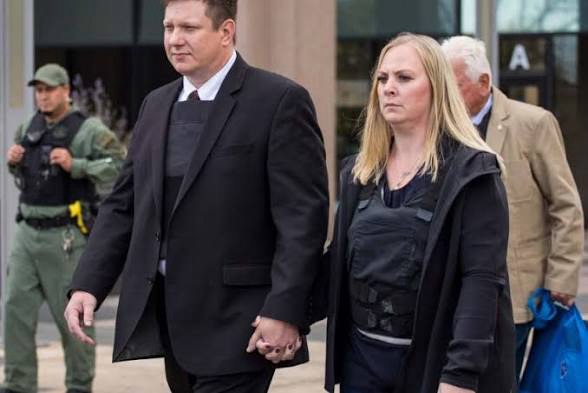
The trial ran about a month, with a strong focus on the dashcam video, expert testimony, and Van Dyke’s own account. Tina Hunter had her settlement; the financial focus shifted to helping Tiffany and her two girls — but the public outrage took its anger out on Jason’s family.
It ended in a historic conviction for a Chicago police officer in a high-profile case. But the lives behind the headlines were worlds being flipped upside down. And it wasn’t just this mother and wife. Van Dyke’s 17-year-old daughter Kaylee sank into depression after the conviction. Both daughters were bullied at school. Father visits were reduced to one phone call a day — touching his hand through dirty visitor’s glass.
This article is a glimpse of the mayhem a first responder’s family faces when their hero is villainized by the public. This article focuses on the Van Dyke family.
The Timeline
• Sept. 5, 2018 – Jury selection begins; questionnaires distributed.
• Sept. 6, 2018 – Prosecutors seek to revoke Van Dyke’s bail after media interviews; bail increased.
• Sept. 10–13, 2018 – Jurors selected.
• Sept. 14, 2018 – Van Dyke requests jury trial; change of venue request rejected.
• Sept. 17, 2018 – Opening statements; prosecutors present dashcam video.
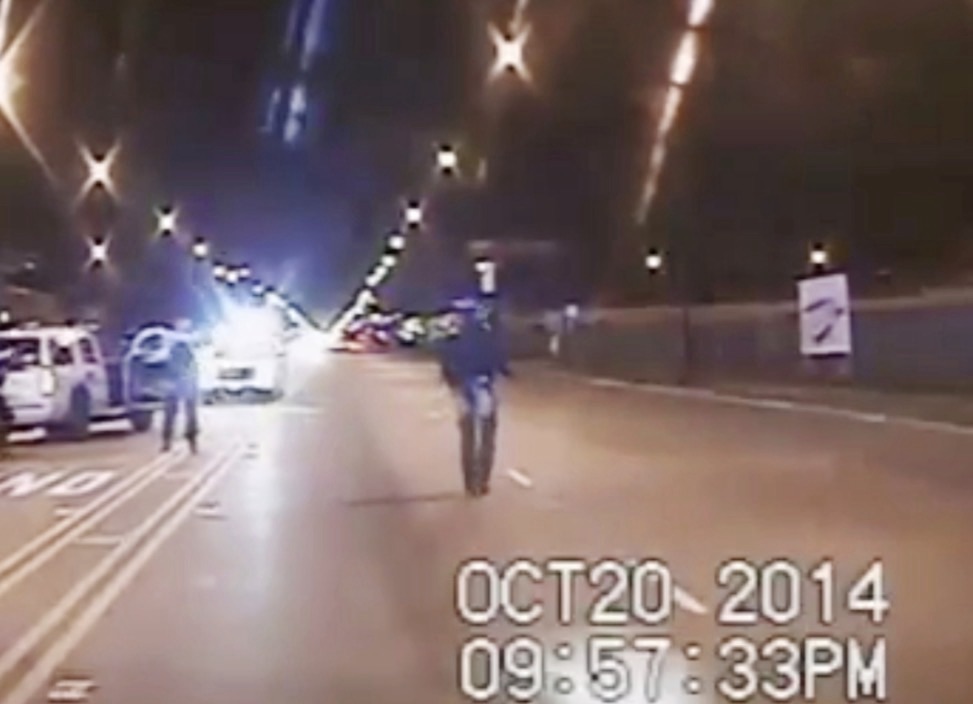
• Sept. 18, 2018 – Officer Joseph Walsh (Van Dyke’s partner) testifies; dashcam shown in court.
• Sept. 19, 2018 – Medical examiner details autopsy findings.
• Sept. 20, 2018 – Prosecutors rest case after 24 witnesses over four days.
• Oct. 2–3, 2018 – Van Dyke testifies; defense rests Oct. 3.
• Oct. 4, 2018 – Closing arguments begin.
• Oct. 5, 2018 – Jury returns guilty verdict on second degree murder and all 16 aggravated battery counts.
“People Need to Know the Jason I Know”
Mid-trial, the family gave its first in-depth interview since the 2014 arrest: Keith Thompson, 35, Jason Van Dyke’s African-American brother-in-law, married to Tiffany’s sister Kimberly defended Jason”s character. At Jason’s request, the family had stayed silent until then, for their safety.
“We are a family of no color.” “People need to know the Jason I know.” He described Jason Van Dyke as a “6’4 gentle giant” — quiet, calm, a Catholic churchgoer, protective of his family. Family gatherings at Thompson’s far-suburban home: fishing, barbecues, Thompson in a White Sox jersey vs. Jason in Cubs. Thompson, a plant supervisor in Kane County, has two daughters from a previous relationship; the four girls are close.
“We pray for both families involved in all this suffering. The McDonald family is also in our prayers.” And the picture-perfect life, altered: “We keep our curtains drawn and have gone off the social grid” — “so aware of the hate that’s out there since the shooting happened.”
The Other Trial
The day before sentencing — January 17, 2019 — three officers, Joseph Walsh, former Detective David March, and Officer Thomas Gaffney, were acquitted of conspiracy, obstruction of justice, and official misconduct for allegedly lying on their police reports to cover up the shooting of Laquan McDonald.
Judge Stephenson cleared the officers of all charges: the prosecution failed to prove a criminal conspiracy, failed to prove intent to deceive — the defense successfully argued the officers simply reported what they observed from their vantage points during a fast-moving, high-stress situation, and did not try to shape a false narrative to shield Van Dyke. The judge noted no indication the officers tried to hide or bury evidence, and ruled the dashcam video was only one viewpoint, not each officer’s viewpoint.
The Sentencing — January 18, 2019
The defense asked for probation on the second-degree murder count and the minimum on aggravated battery (“one act, one crime”). Prosecutors asked for 6 years on each of 16 counts — 96 years total. Several Chicago police officers submitted leniency letters, in addition to his wife and two daughters.
In both her written and spoken statements, Tiffany Van Dyke detailed the severe emotional and physical toll the case had taken on her family — anxiety, depression, eating disruptions, sleep disturbances, school bullying. The family “has suffered more than I can even put into words”; the children do not sleep or eat right, and feel guilty when bullied because their father cannot come to their rescue. She said he was convicted in the “court of public opinion” long before trial: “there was no malice, ill intent, or hatred on that fateful night.” She asked Judge Gaughan for the minimal possible sentence, speaking to her fear of the danger he would face in prison as a police officer convicted of killing a Black teenager — fears that proved true shortly after sentencing.
Their oldest daughter Kaylee, turning 17, wrote of the public hostility the family faced, noting her father disguised himself in public to protect them from harassment. “The day of his verdict not only was my heart ripped out of my chest” — she had fallen into depression. By January, she had last hugged her father in October; jail visits were reduced to views through “dirty glass” with a bad phone connection. No appetite, nightmares, worrying whether he had pillows and blankets. Her letter closed: “Bring my dad home.”
Their youngest daughter Kaitlyn, 12 at the time, acknowledged the loss of a life in this situation while also defending her father’s character. She shared the intense bullying at school, nightmares, unable to concentrate, and that the family had suffered enough. “My dad is not a murderer.” She closed: “I need my dad in my life.”
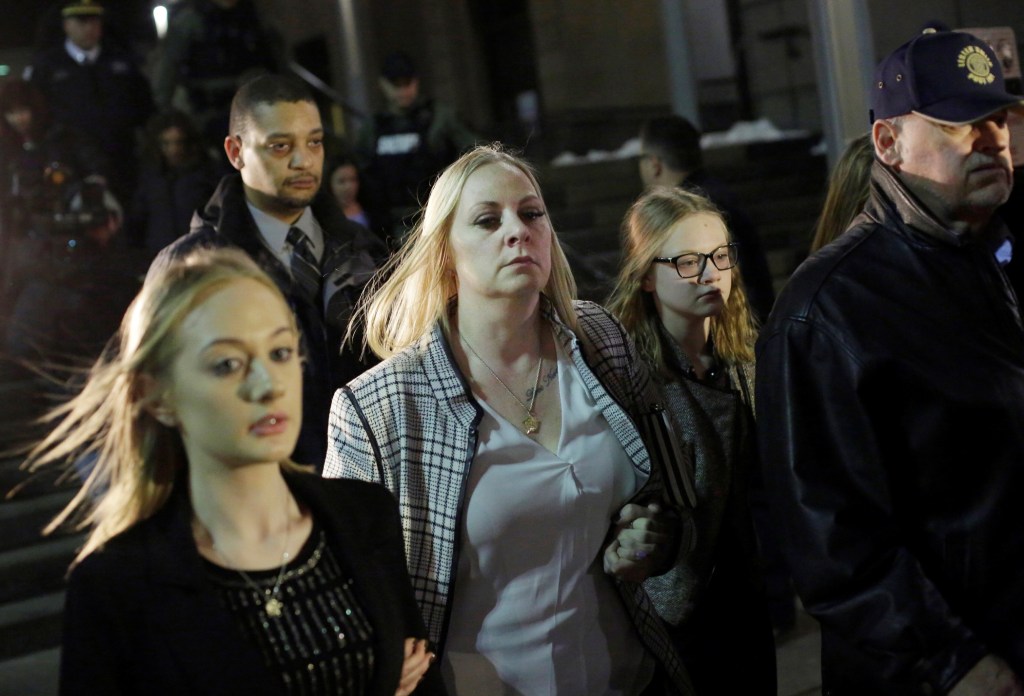
The trauma on their faces is undeniable. There’s a symmetry in this story nobody names: Laquan was a fatherless son. And the choices Jason made that night were about to leave his own two daughters fatherless too — not by a bullet, but by a prison cell. One phone call a day. A hand on dirty glass. The fatherless wound didn’t end on Pulaski Road that night. It found two more children.
Van Dyke was sentenced to 81 months (6 years, 9 months).
Tina Hunter was in the courthouse but couldn’t bring herself into the courtroom. She left before the sentence was announced, and the special prosecutor called her with the decision. He served a little over 39 months and was released February 3, 2022.
When people first hear that, it angers most people. What about the 6 years? Why does he get off so easy? Families of first responders get it. This was the first Chicago police officer in half a century convicted of murder in an on-duty shooting. The attorney general and special prosecutor asked the Illinois Supreme Court to review the sentence; absent a new sentence, about three years served with good-behavior credit. The trial as a whole fundamentally altered the legal, social, and political landscape of Chicago.
“I Cannot Bury My Husband”

Van Dyke was held in protective isolation at a western Illinois jail. On February 5, 2019, state officials quietly transferred custody to the Federal Bureau of Prisons. After two days in federal transit, he arrived at the Federal Correctional Institution in Danbury, Connecticut. On February 7, processed and placed in the general population unit — within hours, beaten by inmates. Minor injuries to head and face. Federal officials moved him to a segregated housing unit, 23 hours a day in his cell.
Illinois transferred him without prior notice to his family or legal team. The trauma to Tiffany and her daughters was two-fold: the failure to notify, and the shock of him in general population, where her worst fear became reality. Tiffany and the family’s attorney held a tearful press conference demanding answers, noting he had been safely isolated in Illinois. Attorney Tammy Wendt: it was “as if he was led like a lamb to slaughter.” Ex-officers are especially vulnerable in general population.
Arguments were made that his injuries were minor and Tiffany was overreacting. But remember: he was moved out of state without her knowledge and placed in general population. “I don’t need people to go into his cell and attack him. The next time this could happen, they could kill him. I cannot bury my husband.” And: “My husband’s life, my family’s life is national news. At the basic minimum, they were supposed to keep him safe.”
Tiffany leaned on her husband’s legal defense team — and on unexpected support from well-wishers who sent frequent flyer miles so she could visit Jason, first at Danbury and then at Otisville, New York, where he was moved to an isolation unit at a medium-security federal facility. (Chicago Sun-Times / Sneed.) His attorney’s second GoFundMe — $100,000 for the wife and kids’ daily living — caught fire with law-enforcement donors: over $45,000 from 500+ people, many saying “it could have been one of them.” (Associated Press.)
The family faced extreme financial and personal strain. Kept entirely in the dark by prison officials, Tiffany relied on friends and social media to stay updated learning of the Illinois Supreme Court’s sentencing ruling from a friend who spotted it on Twitter. (Chicago Sun-Times.) And through all of it, she had no program, no safe place to go for respite or trauma-informed care.
To say Jason Van Dyke got off easy wouldn’t be fair to his wife and daughters, who have been paying the cost right along with him; the cost nobody counted. What’s next?
We are not done yet.
References
• NBC Chicago (leniency letters): https://www.nbcchicago.com/news/local/heart-ripped-out-of-my-chest-letters-from-jason-van-dykes-wife-children-beg-for-leniency-in-new-court-document/5469/
• Sun-Times / Sneed (Thompson): https://chicago.suntimes.com/2018/9/27/18403583/van-dyke-s-african-american-brother-people-need-to-know-the-jason-i-know
• Fox 32 / AP (Danbury): https://www.fox32chicago.com/news/tiffany-van-dyke-speaks-out-after-husband-beaten-up-in-connecticut-prison
• Sun-Times / Sneed (flyer miles): https://danherbertlaw.com/blog/tiffany-van-dyke-speaks-to-husband-for-first-time-since-prison-beating/
• AP (GoFundMe): https://www.police1.com/chicago/articles/thousands-raised-for-kids-of-former-chicago-cop-dcx3wYWV5zOBUVID/
• NPR (sentencing): https://www.krps.org/npr-news/2019-01-18/former-chicago-police-officer-sentenced-to-nearly-7-years-for-laquan-mcdonald-murder
(https://www.kwit.org/2018-10-05/chicago-police-officer-found-guilty-of-2nd-degree-murder-of-laquan-mcdonald) and the NPR release coverage (https://www.nprillinois.org/2022-01-14/ex-chicago-cop-who-killed-laquan-mcdonald-will-be-released-from-prison-early)
The Sun-Times — Mick Dumke and Tim Novak, “$1 million per shot — how Laquan McDonald settlement unfolded after that initial demand,” Dec. 19, 2015 (reported from the attorneys’ own negotiation letters). Full link included in the file.
The courthouse record — Judge Susan Coleman’s probate distribution order, Aug. 26, 2015 (the 45/55 split, the fees, the $2,821/month). One flag: I couldn’t find a separate Courthouse News Service article on the distribution, so I cited the Cook County probate record itself, as reported by the Sun-Times. If you meant a specific CNS piece, tell me later and I’ll swap it.


Thank you for stopping by. We hope you enjoyed the content. Feel free to share what brought you here and how we can support you. (Rude comments will be removed).
You must be logged in to post a comment.